
Last updated October 15, 2026
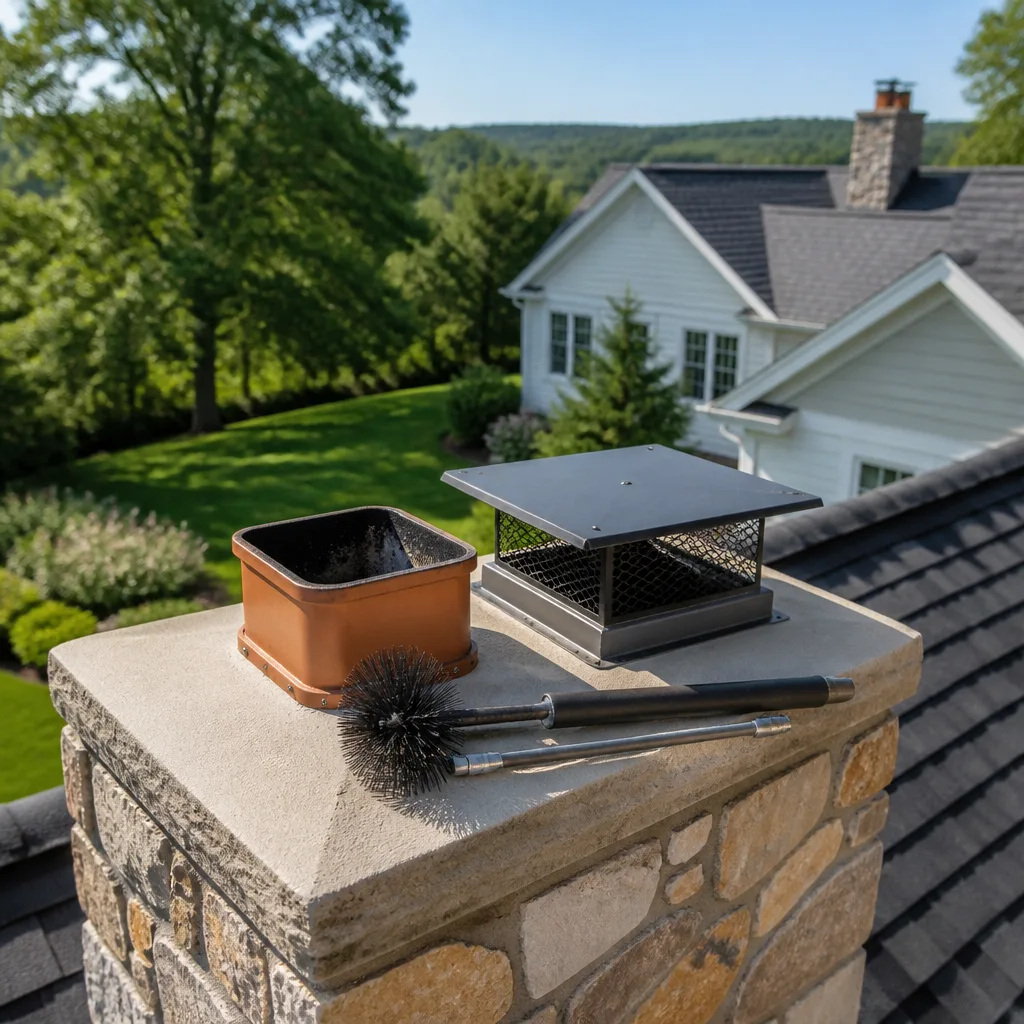 Sweep & inspection
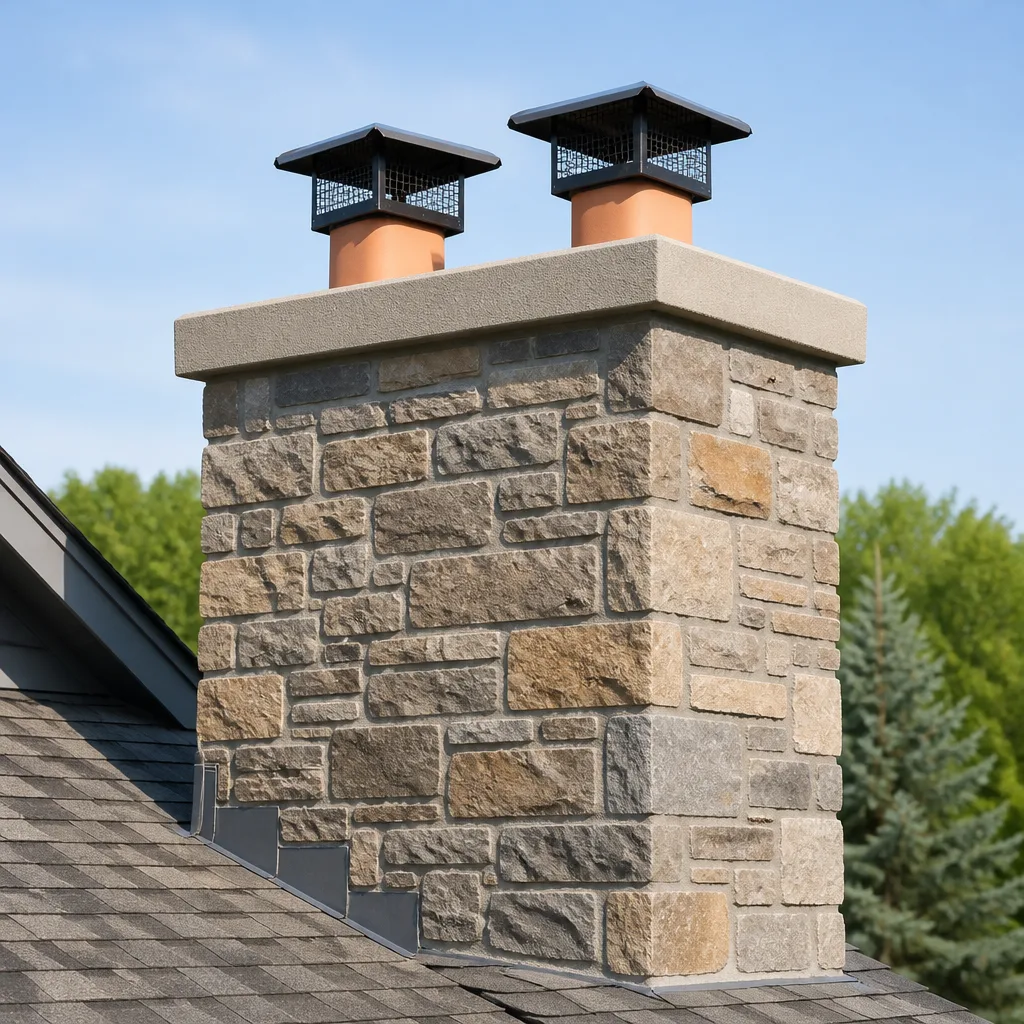 Caps & crowns
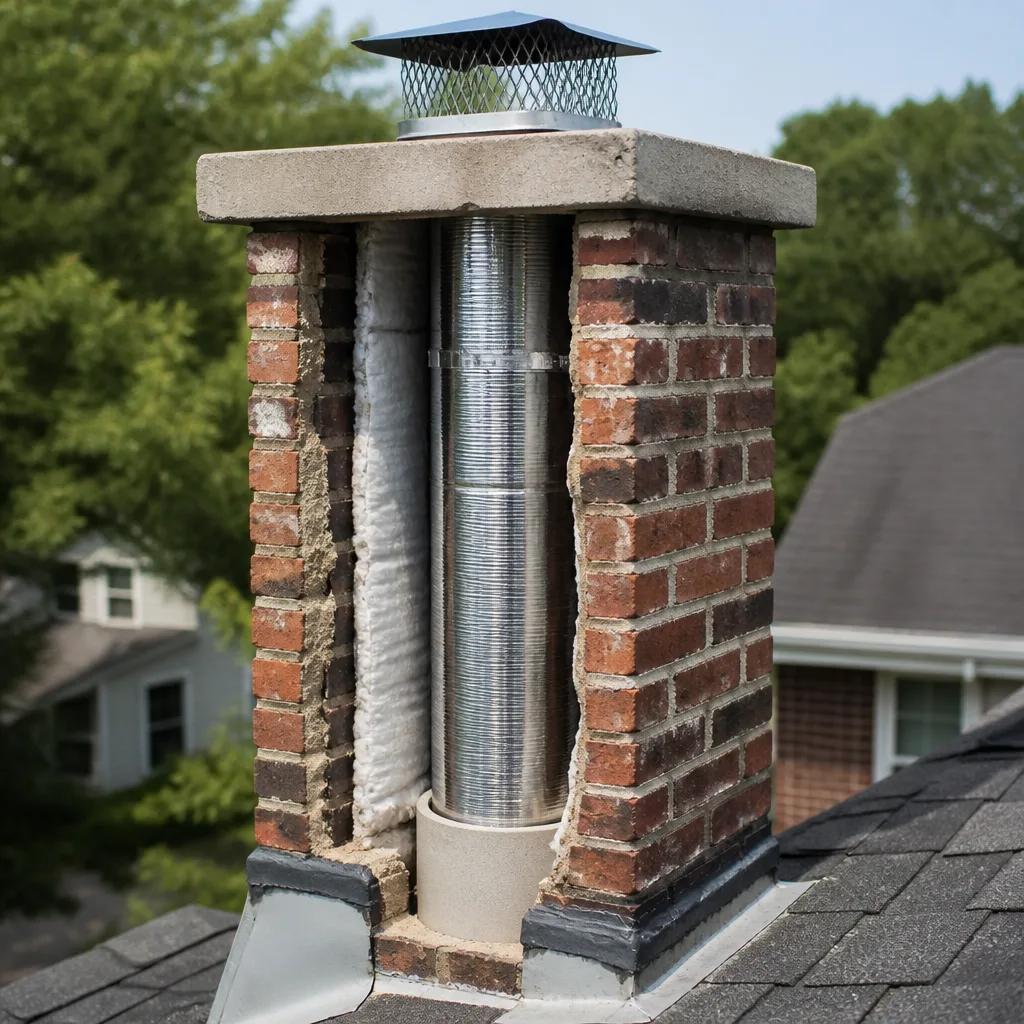 Flue relining
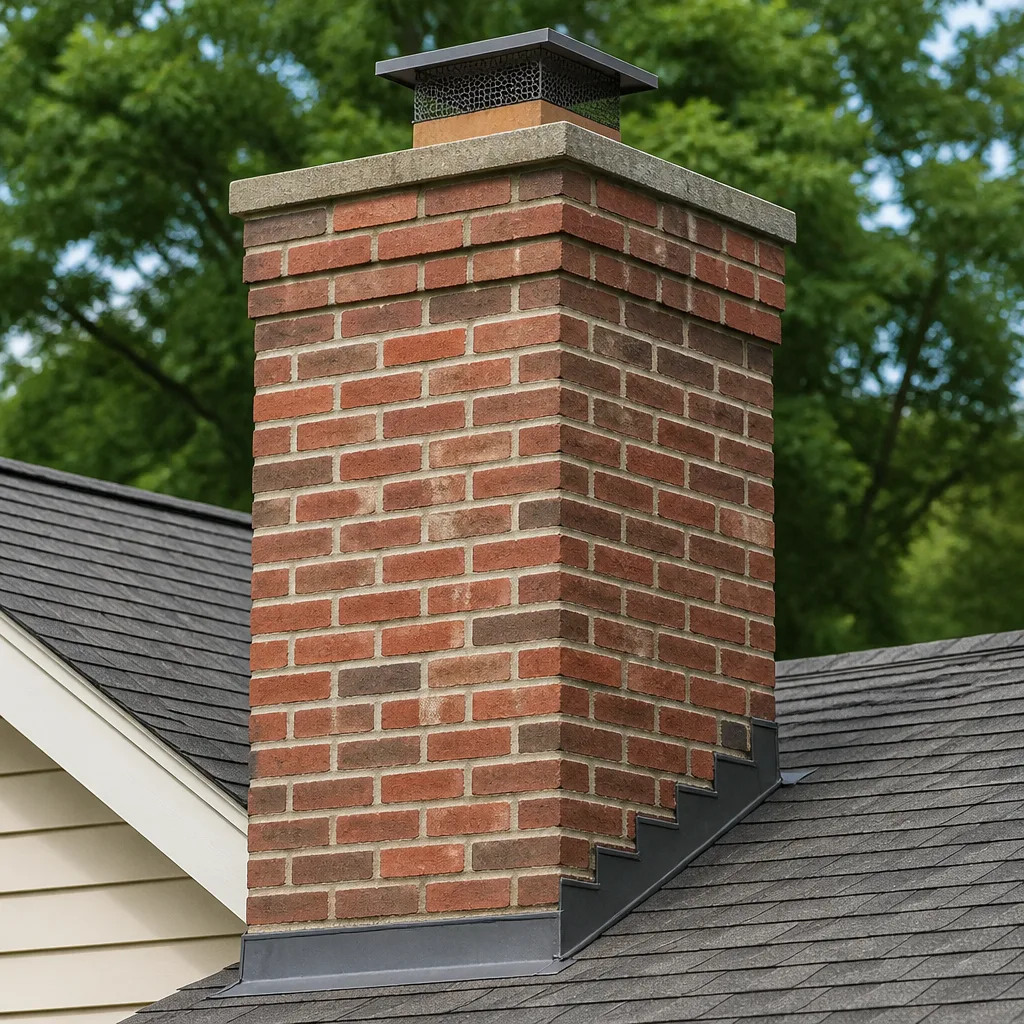 Masonry repair
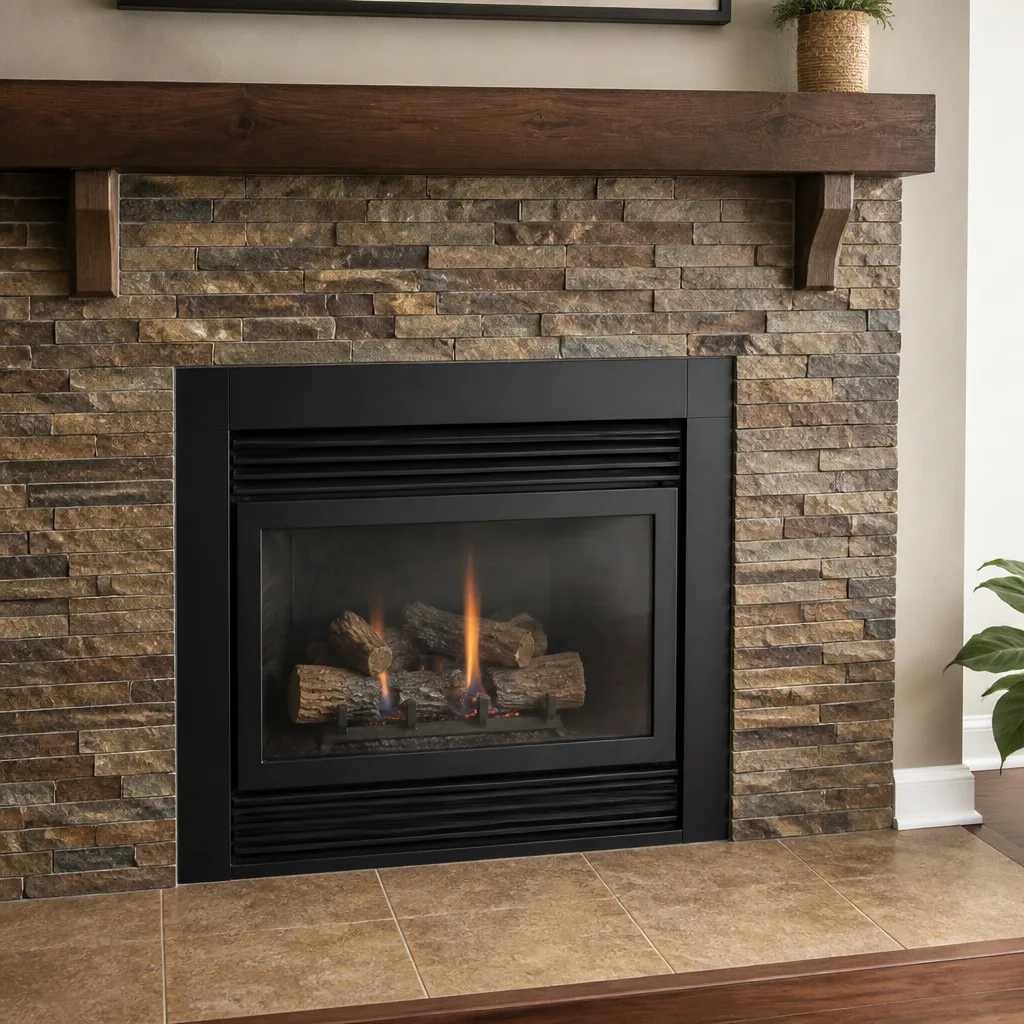 Gas fireplace service
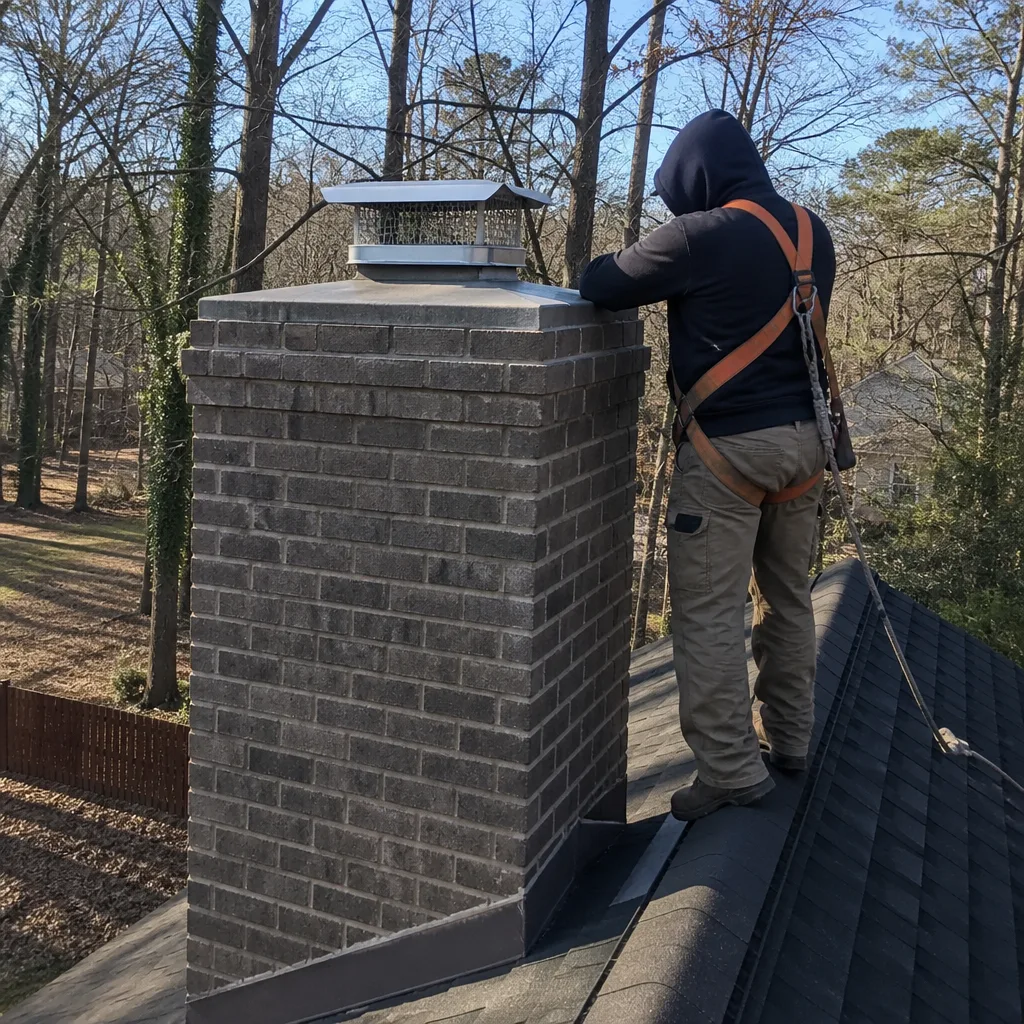
Level 1 sweep and inspection to the NFPA 211 annual standard - flue, crown, cap, and flashing checked and photographed
Chimney sweep logs do not sweep chimneys. They loosen some creosote - which then falls where a brush and vacuum still have to collect it.
Chimney Sweep Maintenance Checklist for Marietta Homeowners
Most chimney maintenance checklists online are written for technicians, not homeowners. They list tasks like “inspect the flue” without telling you what a flue problem actually looks like when you’re standing in your living room holding a flashlight. This guide is different. We’re going to walk through every item on a proper Marietta chimney maintenance checklist, give you the specific pass/fail criteria for each one, and tell you exactly what’s normal versus what warrants a phone call. By the time you finish reading, you’ll be able to do your own between-service walk-around with real confidence, and you’ll know which findings to monitor and which ones mean stop using the fireplace until a pro takes a look.
Quick Answer
A chimney maintenance checklist for Marietta homeowners should cover the visible exterior masonry, the chimney cap and chase cover, the flashing at the roofline, the damper operation, the firebox interior, and the smoke chamber. Most homeowners should do a visual walk-around twice a year, once before burn season starts in October and once after it ends in March, and schedule our Chimney Sweep services and inspection annually. If you find crumbling mortar, a damper that won’t open or close fully, or dark staining on the ceiling around the chimney, call for a professional assessment right away.
Styles & brands we work with
Table of Contents
- The Exterior Walk-Around: What to Look For From Ground Level
- Inside the Firebox: What a Flashlight Reveals
- The Three Things Homeowners Routinely Miss
- Marietta-Specific Timing: When to Do What
- How to Log Your Own Maintenance History
- Which Findings You Can Monitor and Which Warrant a Call
- What a Professional Sweep and Inspection Actually Covers
- Common Mistakes to Avoid
The Exterior Walk-Around: What to Look For From Ground Level
Start outside. Stand in your yard or across the street where you can see the full chimney from top to bottom. You’re looking for five specific things, and each one has a clear pass/fail standard. None of this requires a ladder. A pair of binoculars helps, but your eyes are usually enough in Marietta’s typical two-story neighborhoods like Whitlock Heights or Indian Hills.
Brick and mortar condition. Pass: bricks are intact, mortar joints are uniform and not deeply recessed. Fail: you can see spalling (brick faces flaking off), cracks running through bricks rather than along mortar lines, or mortar that has crumbled out to a depth of more than a quarter inch. In Marietta, we see a lot of spalling on homes built in the 1960s and 1970s, particularly in neighborhoods like Fair Oaks and Chestnut Creek, because those chimneys were built with softer brick that absorbs Georgia’s summer humidity and then freezes during our occasional January cold snaps.
Chimney cap presence and condition. Pass: a metal cap sits on top of the flue opening, rust-free and firmly attached. Fail: no cap, a cap that’s tilted or loose, or rust that has eaten through the mesh sides. A missing cap in Marietta means rain gets straight into your flue, and rain plus creosote makes an acidic paste that eats mortar from the inside out. It also means squirrels and birds. We’ve pulled raccoon nests out of uncapped flues more times than we can count.
Chase cover condition. If your chimney is a framed wood chase with siding or stucco rather than exposed brick, the metal top plate is called a chase cover. Pass: flat, rust-free, sealed around the pipe collar. Fail: standing water, visible rust, or gaps around the pipe. Chase covers fail silently. Water pools, rust eats through, and the first sign is usually a water stain on the ceiling in the room below. We replace more chase covers in East Cobb neighborhoods than anywhere else in Marietta, probably because those homes are a little newer and many have factory-installed covers that have simply aged out.
Flashing at the roofline. Pass: metal flashing lies flat against the chimney and roof, sealed with roofing cement or a proper counter-flashing system, with no lifted edges. Fail: gaps, curling metal, missing sealant, or visible separation between flashing and brick. Flashing is the number one source of chimney leaks we find in Marietta, ahead of both cap problems and masonry issues.
Vertical cracks and leaning. Pass: chimney is plumb, no crack wider than a dime runs vertically. Fail: any visible lean, or a vertical crack that widens at the top. A lean means the footing has settled or the structure has been compromised. That’s a structural issue, not a maintenance item. Don’t ignore it.
Inside the Firebox: What a Flashlight Reveals
Now move inside. Open the damper fully, put on a headlamp if you have one, and get down at eye level with the firebox. You’re checking five components, and you want to know what’s normal for a wood-burning fireplace in Marietta versus what’s a call-worthy problem.
- Firebrick condition. Normal: minor hairline cracks in the firebrick, especially after years of heating cycles. Not normal: missing brick, cracks wider than the edge of a quarter, or brick that has shifted out of alignment. Loose firebrick lets heat reach the framing behind the firebox. That’s how house fires start.
- Mortar joints in the firebox. Normal: shallow erosion, barely visible. Not normal: joints recessed more than a half inch, or joints you can push a key into. Recessed joints mean heat is traveling into gaps that should be sealed.
- Creosote buildup. Normal: a fine dusting of black soot, even a slightly shiny dark layer if you burn a lot of pine. Not normal: crusty, flaky, tar-like creosote a quarter inch thick or more, or glossy, hard, baked-on creosote that looks like black glass. That’s stage three creosote, and it’s a chimney fire waiting for the right temperature. Stage three creosote requires professional removal with rotary tools, not just brushes.
- Damper operation. Pass: the damper opens and closes with reasonable resistance, and it stays in the position you put it. Fail: it’s seized, the handle is broken, or it won’t seal completely when closed. A damper that won’t close lets conditioned air escape year-round and lets rain and insects in when the fireplace is not in use.
- Evidence of water. Pass: firebox is dry, no water staining, no rust on the damper hardware. Fail: rust streaks, water stains on the firebrick, or a musty smell inside the firebox after a rain. Water inside the firebox can come from a failed cap, bad flashing, or a cracked crown, but either way it’s accelerating damage.
One note on safety. The firebox inspection we’re describing is entirely visual. Do not reach inside the flue, do not try to scrape creosote yourself, and do not attempt to reline anything you see as damaged. Chimney fires burn hot enough to crack masonry, and a damaged flue liner can send carbon monoxide into your home without you ever seeing a flame. If you find something in the firebox that worries you, the right move is a phone call, not a DIY fix.
The Three Things Homeowners Routinely Miss
In our experience working throughout Marietta, from the older bungalows near the Square to newer construction off Barrett Parkway, there are three parts of the chimney system that almost no homeowner ever checks. That’s not a criticism. They’re out of sight, and most checklists skip them entirely. Here’s what they are and why they matter.
The smoke chamber. This is the section above the firebox and below the flue, the inverted funnel that compresses smoke and sends it up. You can see it if you open the damper and look up from inside the firebox with a bright light. In many older Marietta homes, smoke chambers were built with corbeled brick, a stair-step pattern that leaves rough ledges where creosote collects. Pass: smooth, sealed walls, no visible buildup. Fail: thick creosote accumulation, especially on the ledges, or missing mortar. Creosote in the smoke chamber is a hidden fuel source. We’ve found smoke chambers so loaded with creosote in Marietta homes that the passage was half its original width. The CSIA recommends parging, or smoothing, unparged smoke chambers to reduce creosote accumulation and make them easier to clean.
The damper gasket. Not the damper plate itself, but the gasket or seal around its perimeter. Most dampers are cast iron or steel, and most have some form of gasket material intended to create a seal when closed. Pass: gasket is intact and creates a reasonably tight seal. Fail: gasket is missing, falling apart, or so warped that light passes through when closed. A failed damper gasket is a year-round energy leak. In Marietta’s humid summers, it also lets moisture into the firebox, which rusts the damper hardware.
The chase cover condition. Yes, we mentioned it in the exterior walk-around, but we’re including it here because it’s the most commonly missed item even when homeowners do look at their chimney. People check the cap on an open chimney and forget that a chase has a different type of cover. If you have a wood-framed chimney with siding, that top metal plate is the only thing keeping rain out of the chase cavity. Check it twice a year. A rusted chase cover usually needs replacement, not repair.
Marietta-Specific Timing: When to Do What
Generic chimney advice says “have your chimney inspected annually” and leaves it at that. Marietta’s climate gives us a more specific schedule. Our burn season runs roughly October through March. That’s when fireplaces get used, that’s when creosote accumulates, and that’s when problems reveal themselves.
Here’s the maintenance timeline we recommend for Marietta homeowners, tied to the actual seasons we experience here:
- Late September: Do your exterior walk-around and firebox check. Look for anything that changed over the summer, especially water damage, rust, or missing caps after summer storms. If you find anything questionable, call for an inspection before burn season starts. You don’t want to discover a flue obstruction on the first cold night in October.
- October through early November: Schedule your annual sweep and inspection if you haven’t already. Most Marietta homeowners get this done in the fall, before the heaviest burning months. A sweep in late October means you burn clean all winter.
- December through February: If you burn weekly, do a quick visual check of the firebox once a month. Look for rapid creosote accumulation, which happens faster with unseasoned wood or restricted airflow. If the creosote is building faster than a dusting, you may need a mid-season sweep.
- March: Do your post-season walk-around. Check for any new cracks, water stains, or damage that appeared over burn season. This is the best time to schedule repairs, because you have six months before the next burn season.
- April through August: Monitor anything you flagged in March. Summer is repair season. If you have cracking, flashing issues, or water problems, schedule the repair now, when chimney companies in Marietta are not fighting the fall rush.
Marietta’s freeze-thaw cycles are less severe than points north, but they happen. We get enough nights below freezing in January and February that water trapped in brick or mortar expands and contracts, gradually widening every small crack. That’s why the post-season March check matters. A hairline crack in March can be a structural problem by October if water gets in and freezes.
How to Log Your Own Maintenance History
Here’s a practical step most homeowners never think about, and it saves real money. Keep a simple log of your chimney work. When you have a sweep, an inspection, a repair, or even just a visual check, write it down. A notebook in a drawer works fine. A note on your phone works better. The point is to build a record so the next technician has context and can’t duplicate work you’ve already paid for.
What to record:
- Date of each sweep or inspection and the name of the company that did it.
- What was found, in the technician’s own words if possible. If they said “moderate stage two creosote in the smoke chamber,” write that down.
- What was done. Swept? Repaired? What parts were replaced?
- Photos. Take a picture of any problem area before it’s cleaned or repaired and after. That’s your evidence.
- The cost of each visit and any guarantee or warranty terms.
Why this matters: when you call a chimney sweep in Marietta, and they tell you the flue needs a cleaning that was just done eight months ago, your log tells you something important. Either the previous sweep did not do the job, or the buildup is abnormally fast, which points to a different problem. Either way, you now have information instead of just a bill. We’ve had Marietta homeowners pull out notes from three years of service history and save themselves from paying for a liner replacement that wasn’t needed because they could show the liner was inspected and passed 14 months earlier.
Which Findings You Can Monitor and Which Warrant a Call
Not everything you find during a checklist walk-around requires a truck roll. Some issues are manage-and-monitor. Others are act-now. Here’s how to sort them.
Safe to monitor yourself:
- Hairline cracks in firebrick that don’t change over six months.
- Light stage one creosote dusting at the end of burn season.
- A damper that’s stiff but still opens and closes fully.
- Small areas of missing mortar that are shallow and stable.
- Surface rust on a chimney cap that hasn’t eaten through.
- Minor water staining that appears once and does not grow after the next rain.
Warrants a call before your next scheduled cleaning:
- Any crack wider than a quarter in the firebox or chimney structure.
- Stage two or three creosote, meaning crusty or glossy buildup.
- A damper that will not open or will not close.
- Water in the firebox after rain.
- A leaning chimney or any vertical crack that’s widening.
- Visible flue obstruction, like a nest or debris.
- Smoke entering the room during normal use.
- The smell of smoke or anything musty inside the house when the fireplace is not in use.
The dividing line is whether the condition can cause injury, significant property damage, or cost you substantially more money if you wait. A hairline firebrick crack is cosmetic until it isn’t, but you can watch it. A flue obstruction is dangerous the first time you light a fire. Don’t delay that call.
What a Professional Sweep and Inspection Actually Covers
Your own checklist is a monitoring tool, not a replacement for a professional sweep and inspection. Here’s what you should expect when you schedule a sweep with any reputable company, including ours. A thorough chimney inspection in Marietta includes everything on your homeowner checklist, plus the things that require professional tools and training.
- Full flue inspection. Using lights and, where appropriate, camera equipment, the technician examines the entire flue from the firebox to the top, looking for cracks, gaps, obstructions, and creosote accumulation. If a camera inspection is done, you should see the images.
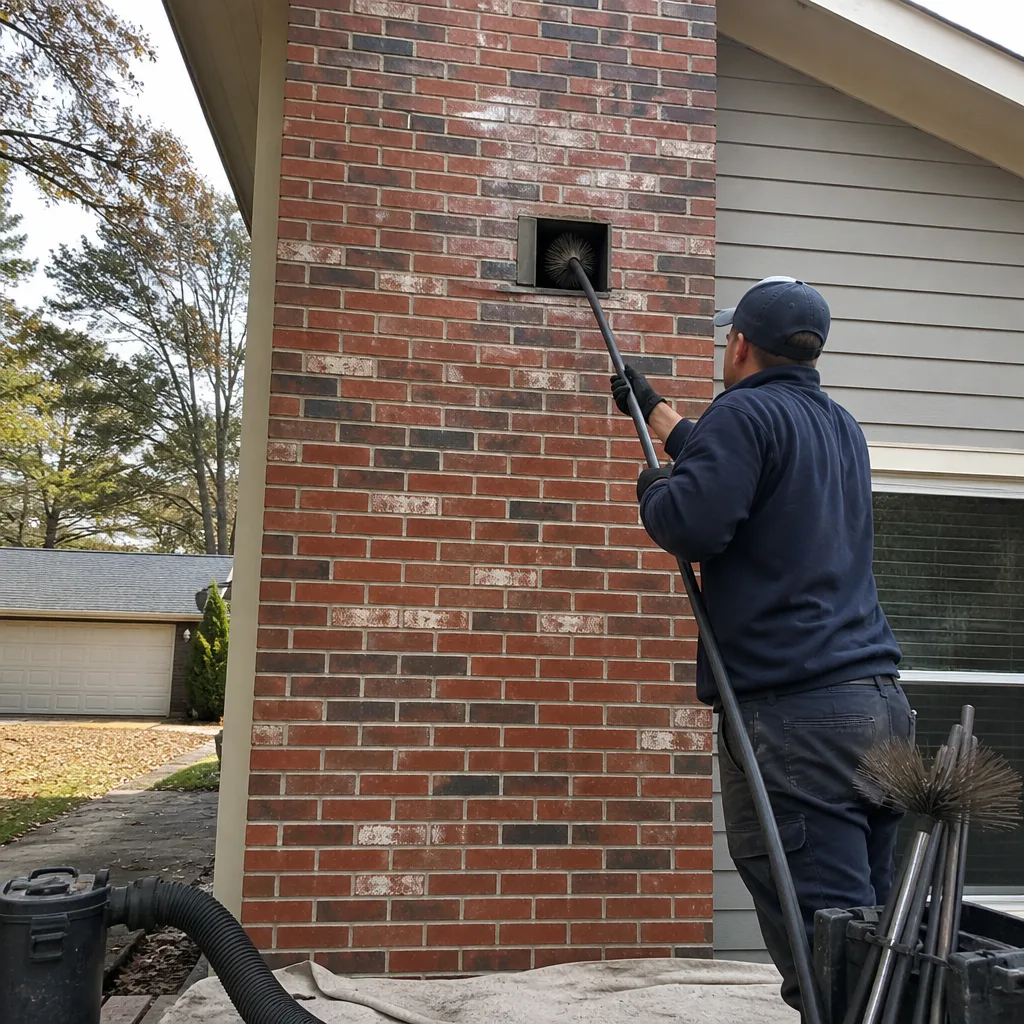
- Creosote removal. Rotary brushes or rods clean the flue walls, smoke chamber, and damper area. The goal is to remove all stages of creosote to the point of bare flue liner.
- Smoke chamber cleaning. This area above the firebox is included in a proper sweep. We have seen companies in Marietta that skip it because it requires specialized brushes and takes more time. It should never be skipped.
- Firebox inspection and cleaning. Ash and debris removal, firebrick check, mortar check.
- Cap, crown, and flashing check. Usually done from the roof. The technician verifies the cap is sound, the crown is sealed, and the flashing has no gaps.
- Damper test. Full open and close cycle, seal check, replacement if recommended.
- Safety and clearance verification. The technician confirms that combustibles near the fireplace are within safe distances and that the hearth meets code.
Prices for a sweep in Marietta generally run between $180 and $340 for a standard open-face wood-burning fireplace, depending on the level of creosote and the home’s configuration, like roof pitch or a particularly tall flue. If the technician recommends additional work, like a liner repair or a fireplace repair in Marietta, ask to see the evidence. A good company will show you the camera footage or photos and explain exactly what’s failing and what happens if you wait. If they won’t show you, get a second opinion.
Common Mistakes to Avoid
- Skipping the pre-season visual check because the fireplace worked fine last year. A year of Georgia rain and humidity can change things. Two of the most common sources of chimney failure in Marietta, flashing leaks and chase cover rust, both worsen silently over summer. You won’t know until you look.
- Burning unseasoned wood and not understanding why creosote builds so fast. Green wood burns cooler and produces more smoke, and more smoke means more creosote. In Marietta’s humid climate, firewood also takes longer to season than it does in drier regions. Stacked and covered in a dry spot, split hardwood usually needs a full 12 months here, often a bit longer if it’s stored in a shady area.
- Ignoring a damper that’s hard to move. A stiff damper is a warning sign that rust or warping is developing. It’s far cheaper to fix a damper than to replace one, and if the damper fails in the closed position, your fireplace is unusable until it’s repaired.
- Assuming the chimney cap is optional. It isn’t. An uncapped flue in Marietta will eventually fill with something, rain, leaves, a bird, and every outcome is worse than the cost of a cap. Caps are cheap. Damage from an uncapped flue is not.
- Trusting a sweep recommendation without seeing the evidence. No one should replace a liner or rebuild a smoke chamber on a verbal say-so. If a company recommends a $2,000+ repair, ask for camera footage or photos. If they can’t produce them, call someone else. We show our work on every inspection and put our recommendations in writing with the evidence attached.
- Doing a partial check and calling it done. Checking the firebox but not the chase cover, or the flashing but not the cap, gives you a false sense of security. The exterior and interior checks are meant to be done together, top to bottom.
See the difference
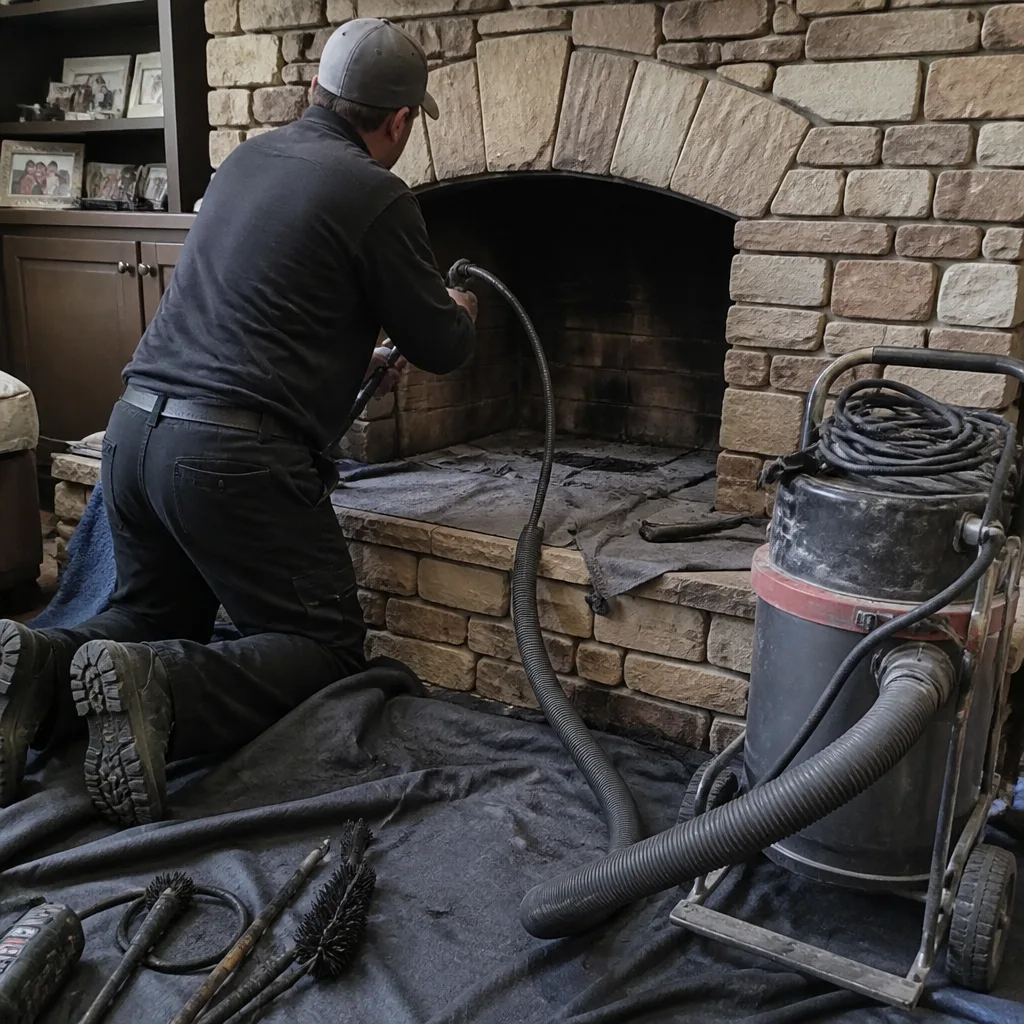 Before
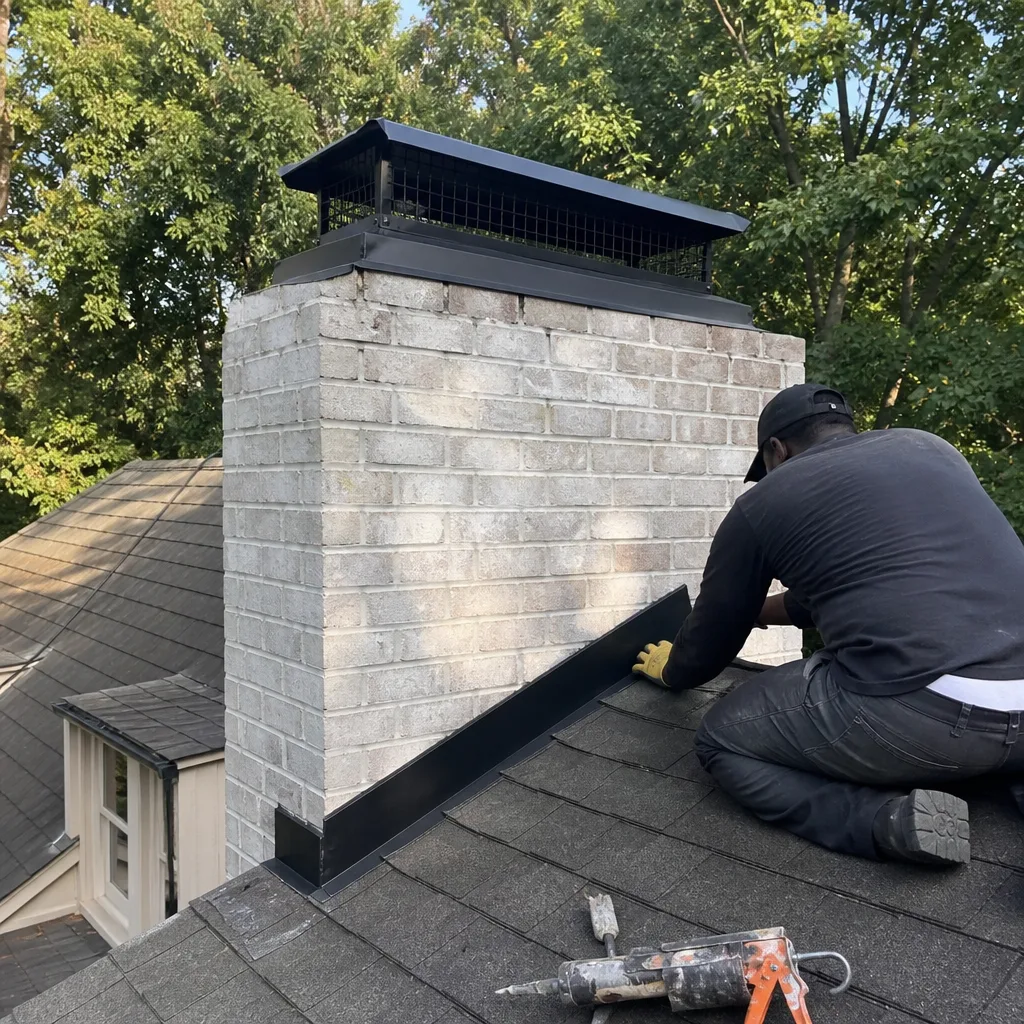 After
After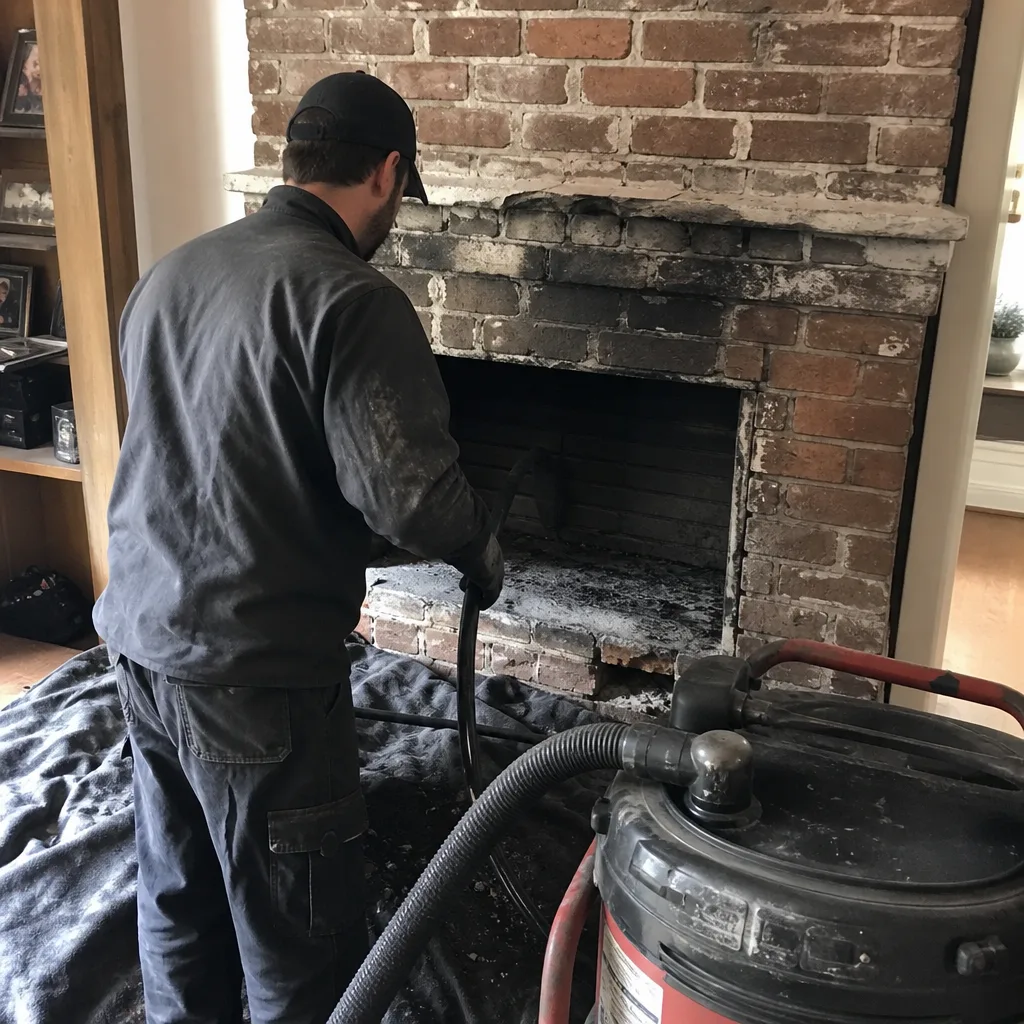 Before
 After
After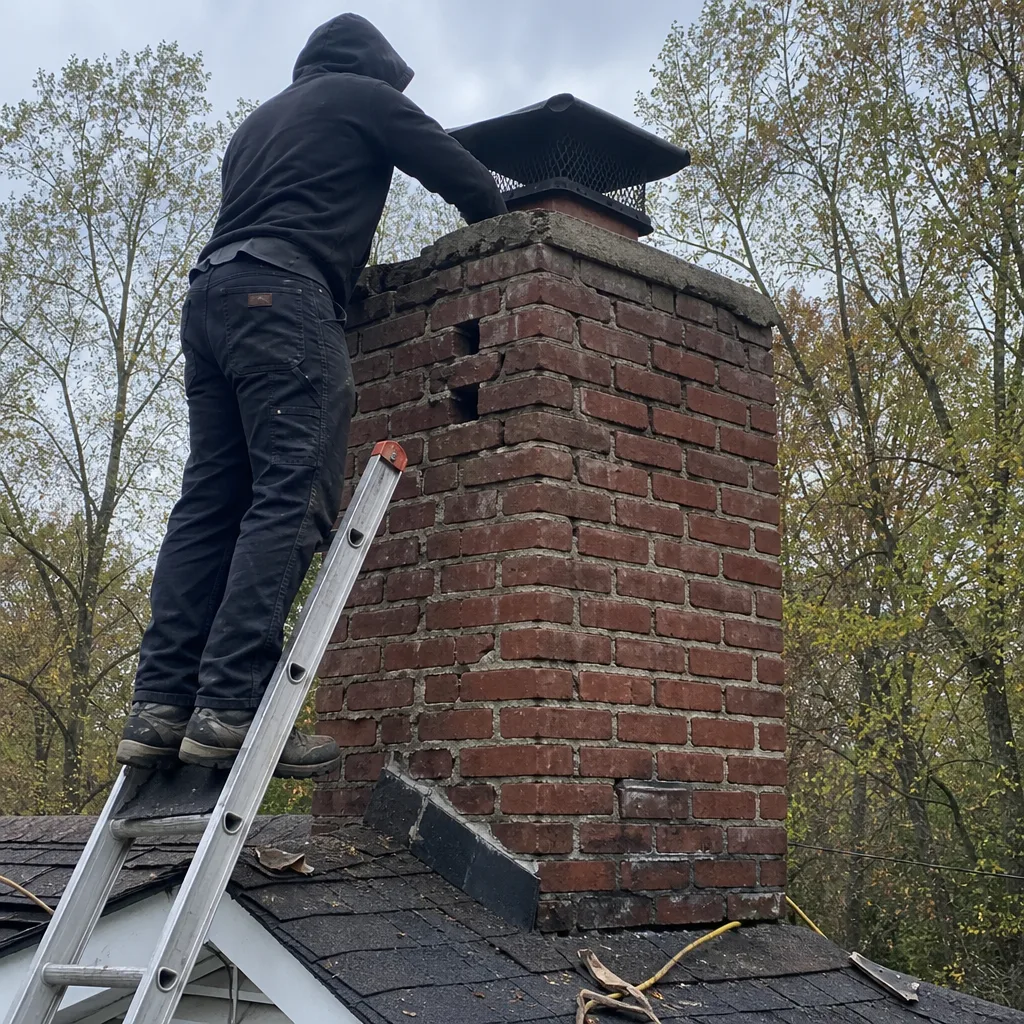 Before
 After
AfterWhen to Call a Professional
Call a professional when your checklist finds anything that falls into the “warrants a call” category, when you see water in the firebox, when smoke enters the room, when your damper fails, or when it has simply been more than 12 months since your last sweep and inspection. The annual sweep is the backbone of chimney maintenance, and it’s the cheapest way to catch a small problem before it becomes a large one. If you’re in the Marietta area and want a written price before any work starts, Ashby Chimney Marietta home offers free estimates. You can reach a live person at (478) 796-8742.
Frequently Asked Questions
A standard chimney sweep in Marietta typically runs between $180 and $340 for a wood-burning fireplace, depending on creosote level, roof access, and flue condition. The best way to get an exact number is to call us at (478) 796-8742. We give a written price before we start, and the number on the invoice matches the number we quoted.
Once a year is the standard recommendation from the Chimney Safety Institute of America and the National Fire Protection Association, but in practice it depends on how often you burn and what you burn. If you burn weekly through Marietta’s October-to-March season, once a year is right. If you burn more than three times a week, or burn less seasoned wood, you may need a mid-season sweep around January. The best way to know is to check your firebox monthly and watch the creosote accumulation.
Only if the current liner is cracked, spalling, or separating. A camera inspection will show this clearly. Some older Marietta homes have clay tile liners that are original to the house, and after 40 or 50 years, those tiles often crack. Others have stainless liners that are fine. If a technician recommends a new liner, ask to see the camera footage that supports the recommendation. If we recommend it, we show you the images. If it’s genuinely fine, we say so, and we put that in writing. We use HeatShield and DuraFlex materials when a liner repair or replacement is warranted.
Creosote accumulates, and creosote burns. A chimney fire can reach temperatures above 2,000 degrees Fahrenheit, hot enough to crack flue tiles, warp the steel liner, and ignite the framing around the chimney. Even if you’re lucky enough to avoid a fire, water intrusion goes uncaught and turns a $300 flashing repair into a $3,000 masonry rebuild. Skipping maintenance doesn’t save you money. It just postpones the expense and multiplies it. Get on an annual schedule. Call (478) 796-8742 and we’ll set it up.
You can do your own visual walk-around and keep a maintenance log, and you should. You should not do your own sweeping. Chimney sweeping requires brushes sized to your flue, access to the roof, and the ability to identify problems that a homeowner’s eye won’t catch. More importantly, a proper sweep includes a safety check of the entire system, and that’s the part that keeps your house from burning down. The DIY part is watching and logging. Leave the sweeping to us.
Late summer to early fall, meaning August through October. That’s when you get your sweep and inspection done before burn season, and it’s when the weather is good for roof work. Repairs are best scheduled March through May, after burn season ends, so you have plenty of time before the next October. Summer is repair season. If you call us in July, you’ll get a faster appointment than if you wait until the first cold snap in November.
The Bottom Line
A chimney maintenance checklist for Marietta homeowners works when it gives you pass/fail criteria for every item, not just a list of tasks. For a deeper dive, see The Complete Guide to Chimney Cleaning in Marietta. Check the exterior from the ground, check the firebox with a flashlight, and pay special attention to the smoke chamber, damper gasket, and chase cover, the three things most homeowners miss. Time your checks around Marietta’s actual burn season, October through March, and log everything so no technician can sell you work you’ve already paid for. When you find something that warrants a call, make the call. Ashby Chimney Marietta gives written prices before work begins, written guarantees when the work is done, and if a covered repair fails, we come back at no charge. That’s the 365-Day Done Right Promise. Call (478) 796-8742 for a free estimate.
Written by Nathan Corliss, Owner at Ashby Chimney Marietta, serving Marietta since 2002. Looking for more guides & resources?