
Last updated October 15, 2026
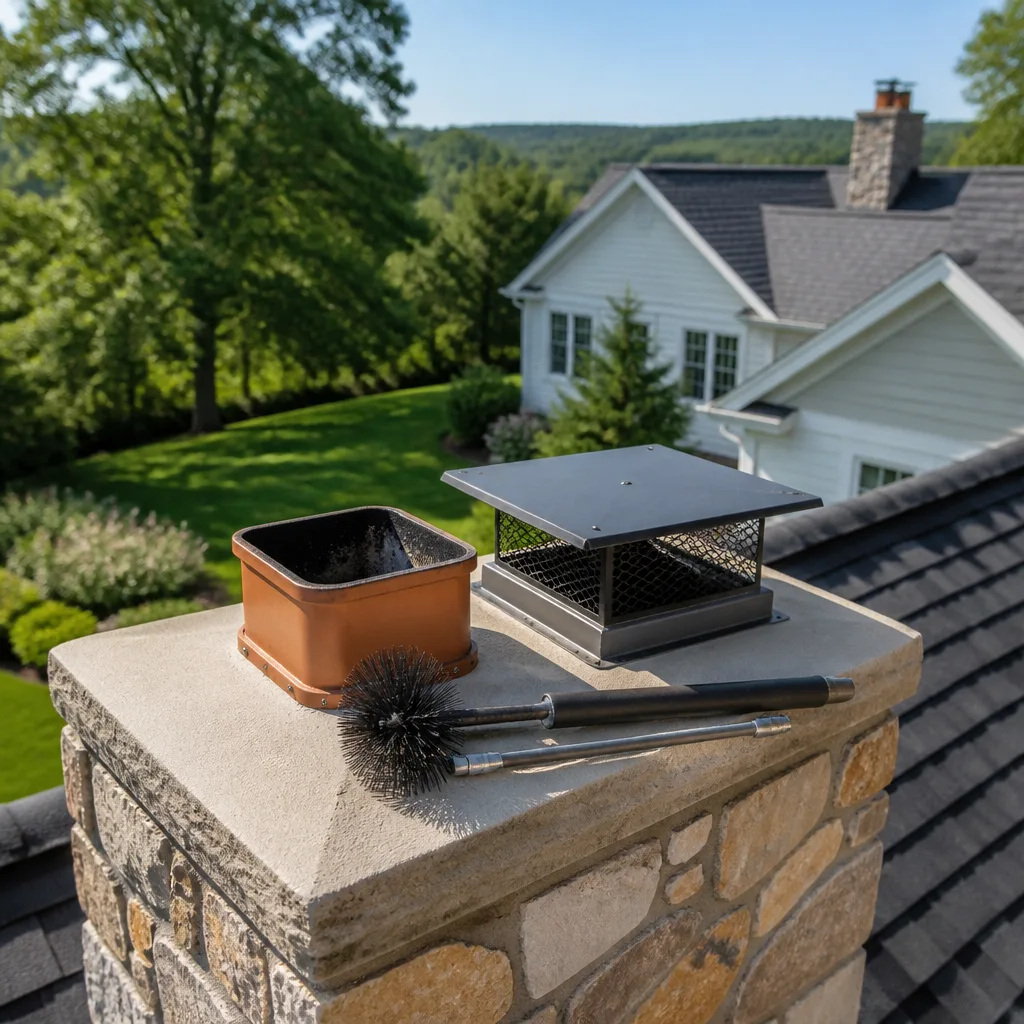 Sweep & inspection
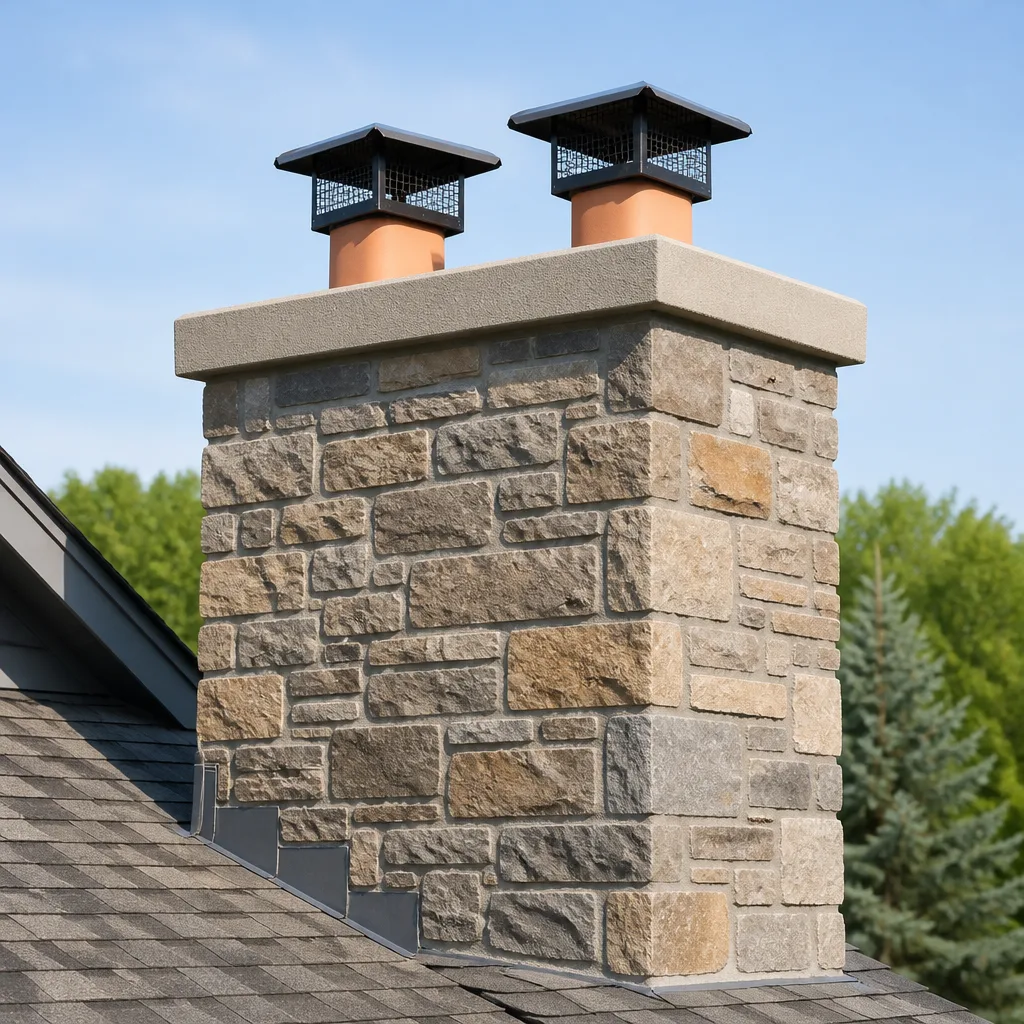 Caps & crowns
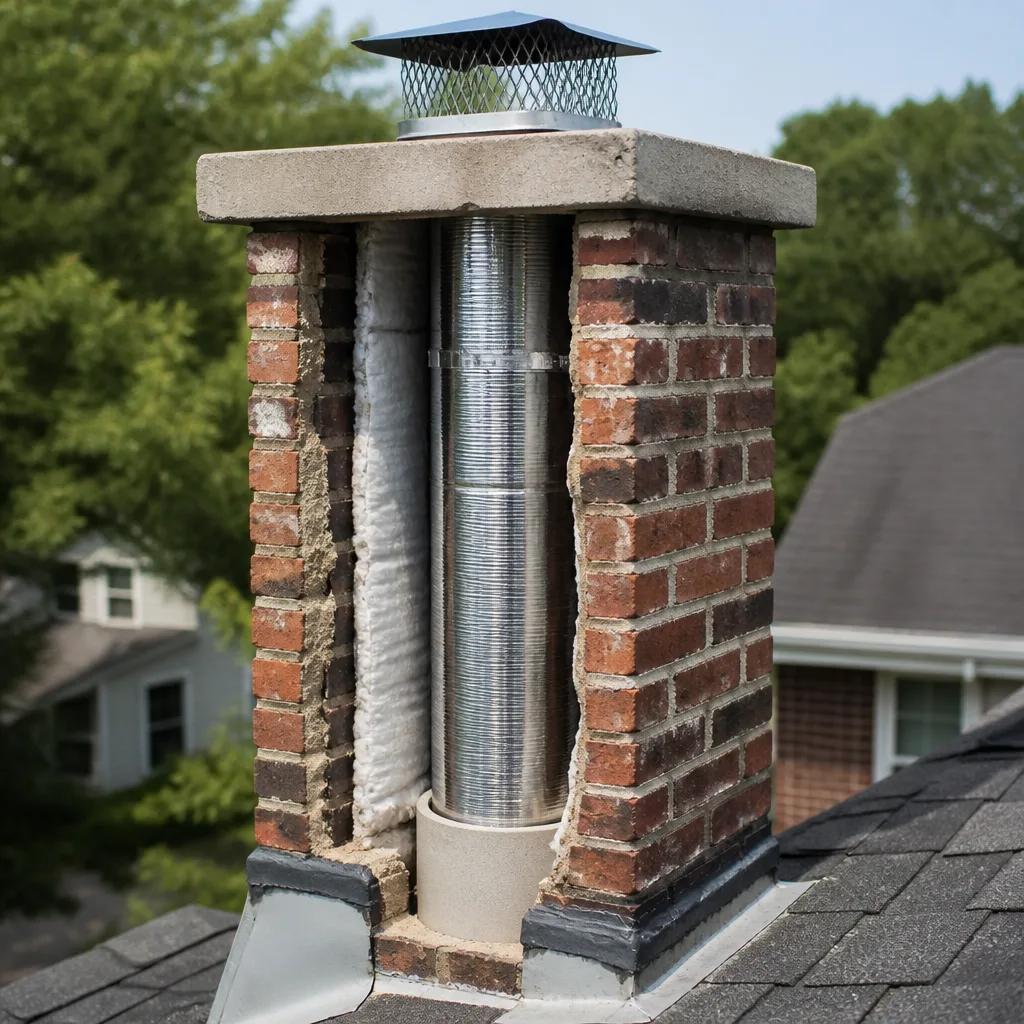 Flue relining
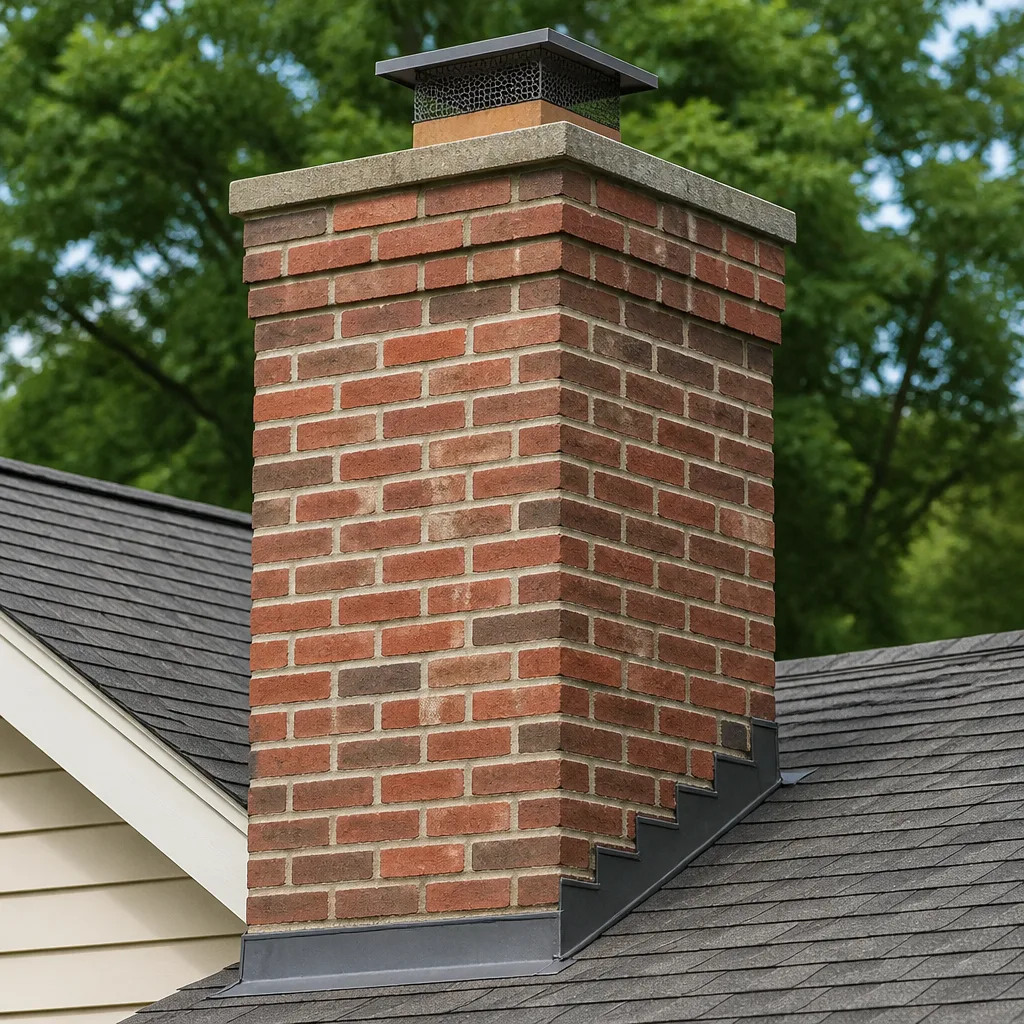 Masonry repair
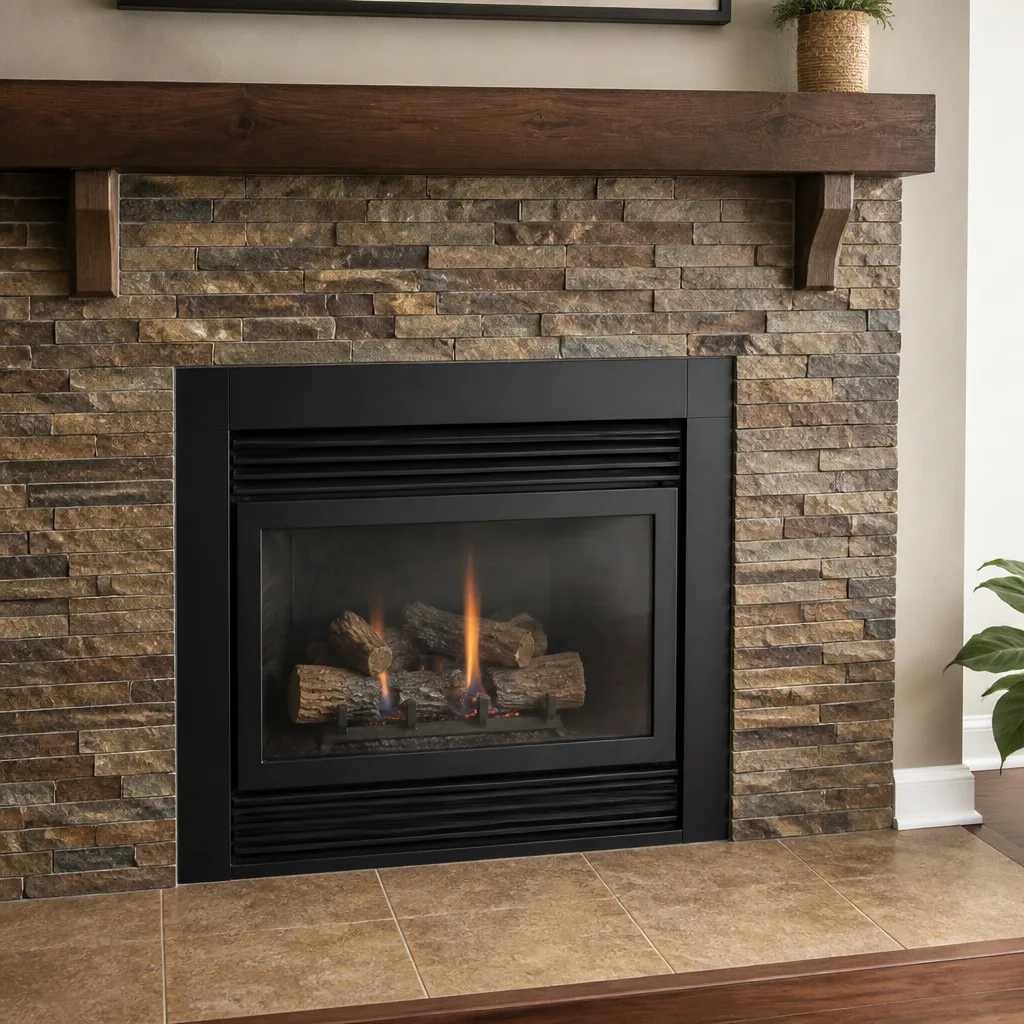 Gas fireplace service
Level 1 sweep and inspection to the NFPA 211 annual standard - flue, crown, cap, and flashing checked and photographed
Chimney sweep logs do not sweep chimneys. They loosen some creosote - which then falls where a brush and vacuum still have to collect it.
The Complete Guide to Chimney Cleaning in Marietta
A chimney “cleaning” from one Marietta company can mean 15 minutes with a brush and a leaf blower. From another, it means a full Level 1 inspection, a video scan of the flue interior, and a written report you can file with your insurance. Both call it the same thing on the invoice, and both charge roughly the same price. That gap, between what you think you’re paying for and what actually happens on your roof, is where most homeowner frustration starts.
This guide closes that gap. You’ll learn exactly what a proper chimney cleaning in Marietta includes, step by step, so you can watch the work happen and know whether it’s being done right. You’ll also learn why your 1980s split-level near East Cobb needs a different approach than a 1920s Craftsman near the Square, what a written price should include before anyone climbs a ladder, and how to read the report you get afterward. We’ll cover costs in plain dollars, the one tool that separates real sweeps from handymen, and the creosote profiles unique to Marietta’s mix of housing stock.
Styles & brands we work with
Quick Answer
A chimney cleaning in Marietta, GA typically costs $180 – $320 for a standard sweep of a wood-burning fireplace, depending on flue height, creosote stage, and whether animals or blockages are present. A proper cleaning takes 45 – 90 minutes and includes drop cloths, a brush sized to your flue, a HEPA-filtered vacuum, and a visual check of the firebox, damper, and cap. Most Marietta homeowners with a wood-burning fireplace need this every 50 – 70 fires, or once per year if they burn regularly from October through February.
Table of Contents
- What Actually Happens During a Chimney Cleaning: The Full Sequence
- Why Marietta’s Homes Create Two Completely Different Creosote Problems
- What a Written Pre-Job Price Should Include (And What Should Worry You)
- CSIA-Certified Sweep vs. Handyman with a Brush Kit: Why It Matters for Insurance
- How Often Should You Clean Your Chimney in Marietta?
- How to Read Your Technician’s Report After the Job
- What You’re Actually Removing: Creosote, Soot, and the Stuff That Hides in Flues
- Common Mistakes to Avoid
- When to Call a Professional
- Frequently Asked Questions
- The Bottom Line
What Actually Happens During a Chimney Cleaning: The Full Sequence
A proper chimney cleaning in Marietta follows a specific order. If your technician skips a step, you now know exactly what to point to. Here’s the sequence we follow on every job, written out so you can hold any contractor to it.
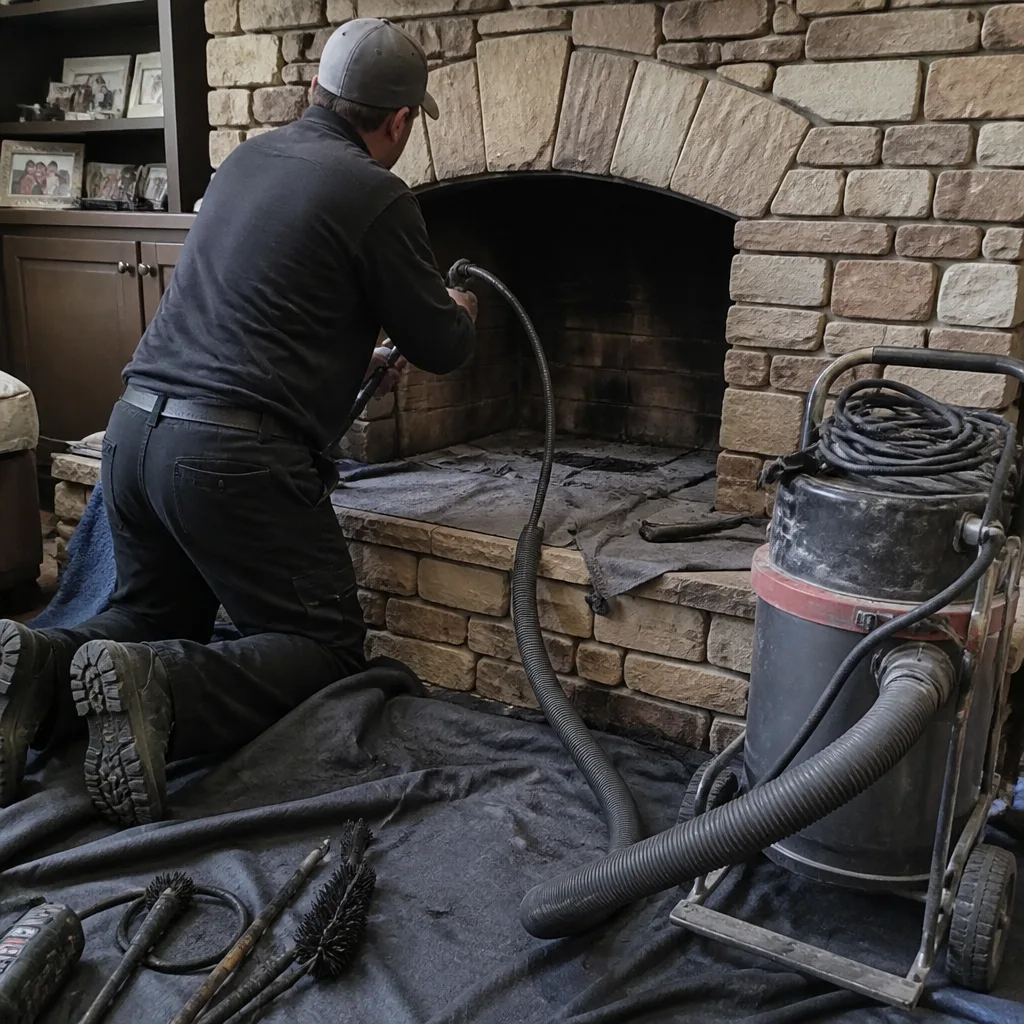
- Floor protection and setup. Drop cloths go down in front of the fireplace, extending at least 6 feet into the room. The damper area gets covered, and a HEPA-filtered vacuum is set up and running before any brushing starts. If a crew shows up without drop cloths, that’s your first signal to ask questions.
- Firebox inspection. The technician examines the firebox floor, walls, and back wall for cracked brick, deteriorating mortar, or rusted components. This is a visual check, not a repair. Findings get noted, not fixed on the spot unless you’ve approved the work beforehand.
- Damper check. The damper gets opened, closed, and tested for smooth operation. A rusted or stuck damper changes how the cleaning proceeds, because the brush can’t safely pass through a partially closed damper without damaging it.
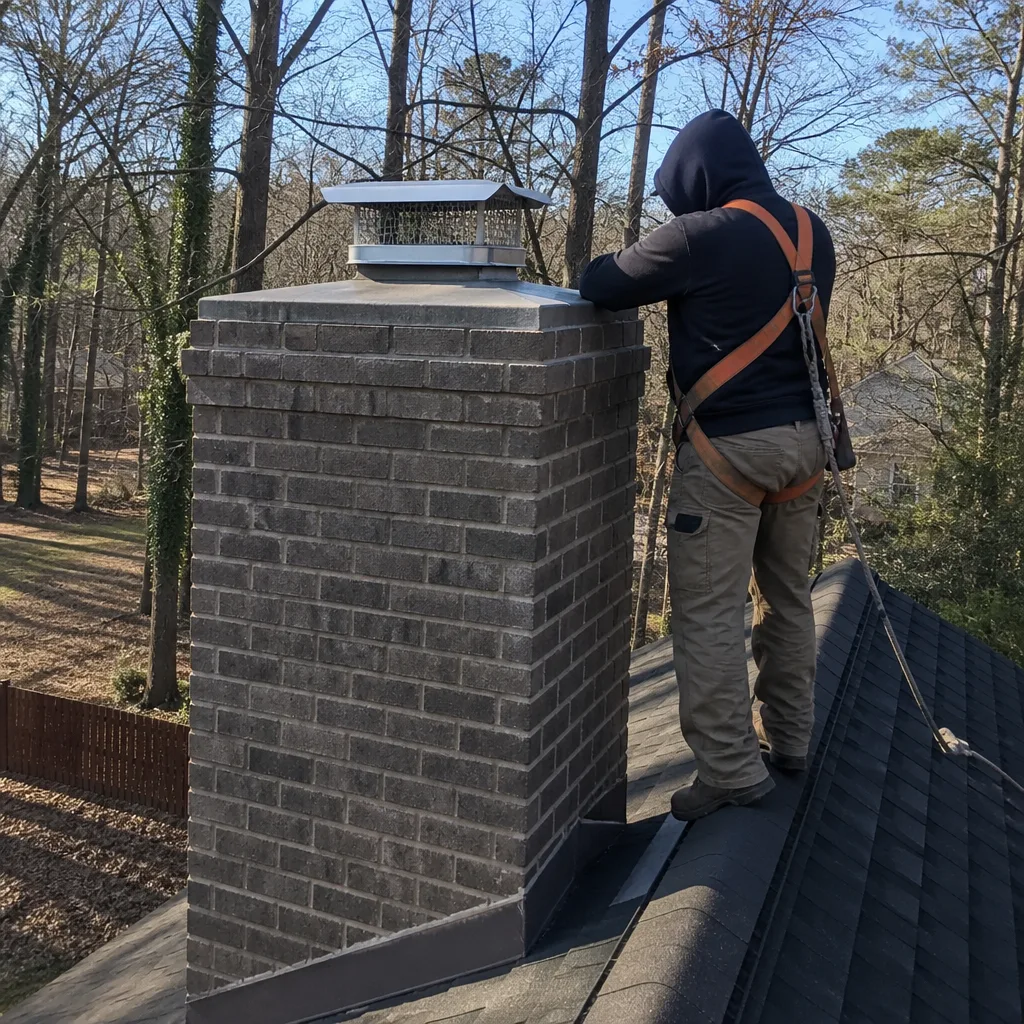
- Top-down brushing. On the roof, the technician removes the chimney cap (if present), sizes the brush to the flue, and works downward from the top. This is the method that actually removes creosote. A bottom-up brush through the fireplace can miss the upper third of the flue where most creosote accumulates.
- Flue wall contact checking. A good sweep listens and feels for changes in brush resistance. Sudden loose spots, catches, or gaps can indicate missing flue tile joints or damaged liner sections. These go into the report as observations, not upsell items.
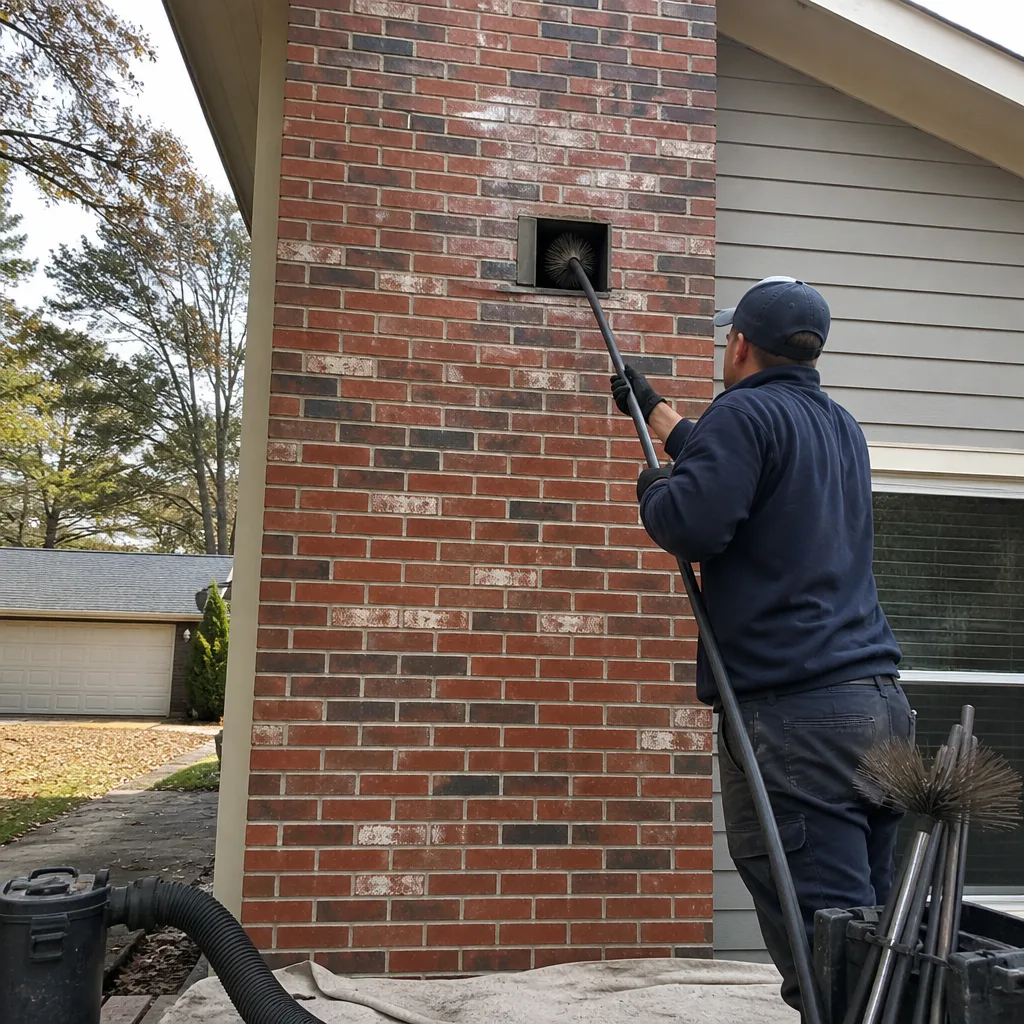
- Vacuuming. As the brush works, the vacuum captures loosened soot and creosote at the firebox end. This is continuous, not a cleanup after the fact, and it’s why a quality cleaning leaves your living room floor cleaner than it started.
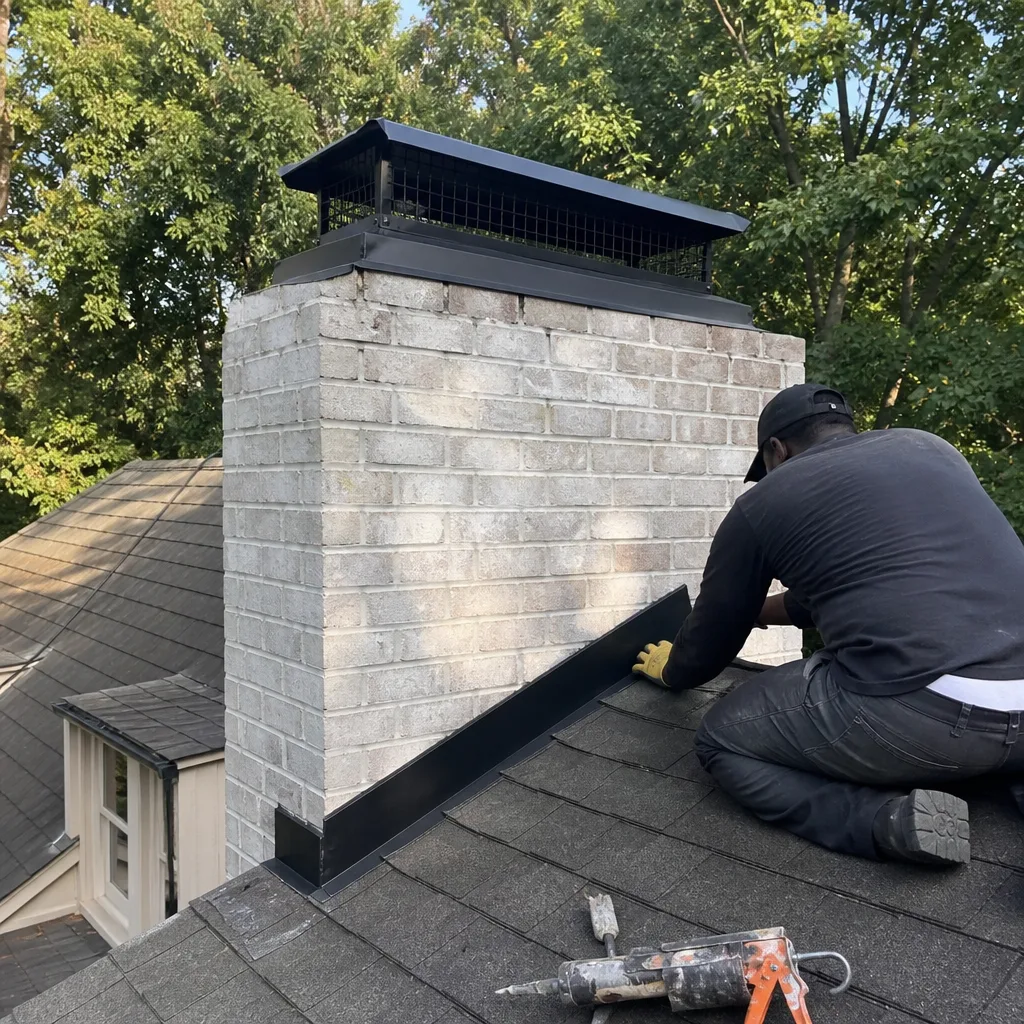
- Cap and spark arrestor cleaning. The chimney cap gets brushed clean and checked for rust or damage. A clogged spark arrestor screen is one of the most common causes of smoky fires in Marietta, especially after oak-heavy burning seasons.
- Final visual sweep of the smoke chamber. The technician shines a light up into the smoke chamber, which is the transition area between firebox and flue. Creosote accumulates here heavily, and many budget cleanings skip it because it requires reaching up with a specialty brush.
- Report and walkthrough. The technician walks you through what was found, what was removed (a good report estimates creosote volume or stage), and what to watch for. You should receive this in writing, and any recommendation should reference specific observations, not vague warnings.
This sequence takes 45 – 90 minutes for a standard open-hearth wood-burning fireplace. If a cleaning is done in under 30 minutes, that’s a red flag. Nothing in Marietta’s housing stock, with its mix of clay tile liners and stainless steel liners at varying heights, can be properly cleaned that quickly.
Why Marietta’s Homes Create Two Completely Different Creosote Problems
Marietta’s housing stock splits into two distinct eras, and each creates a different creosote profile. This is not something a generic national guide will tell you, because it requires working on roofs across the city, from the Victorian-era streets around the Marietta Square to the 1990s and 2000s subdivisions off Dallas Highway and Sandy Plains Road.
Older Marietta homes, especially those built before roughly 1950, typically have larger fireboxes, shorter flue runs, and clay tile liners. These chimneys were built for coal or for burning whatever the original homeowners had on hand. When modern homeowners burn seasoned hardwood at lower temperatures, the short flue run means smoke cools quickly and deposits a thick, gummy creosote in the upper third of the chimney. We regularly see Stage 2 creosote (a flaky, granular buildup) and Stage 3 (a hardened, shiny glaze) in homes near the Marietta Square, even from homeowners who think they’re doing everything right. One November in a Church Street bungalow, we removed enough creosote to fill a two-gallon bucket, and that homeowner had only burned 12 fires the previous winter. The short flue was cooling smoke before it could exit.
Newer Marietta subdivisions have a different profile. Homes built in the 1980s through the 2010s usually have taller chimneys with newer prefabricated liners, but the fireplaces themselves are often factory-built units with smaller flues than you’d expect. These get choked with soot faster, not creosote. The problem isn’t dangerous glaze, it’s airflow restriction that sends smoke back into the living room. We see this constantly in subdivisions off Barrett Parkway and Powder Springs Road.
The practical takeaway: if your Marietta home is older, your creosote is likely thicker and more dangerous. If it’s newer, your flue is more likely to be narrow and soot-clogged. Both need attention, but the cleaning approach and the tools differ. A brush sized for a Victorian-era clay flue won’t fit a 6-inch prefabricated liner in a 1998 East Cobb townhome.
What a Written Pre-Job Price Should Include (And What Should Worry You)
The number one complaint we hear from Marietta homeowners is not about price, it’s about the gap between the quoted price and the invoice at the end. A sweep says $150 on the phone, then “finds” issues once the brush is in the flue, and suddenly the homeowner is being pushed toward a $3,000 liner replacement they can’t verify. That’s the experience that makes people distrust chimney companies entirely.
A written pre-job price should include specific line items. Here’s what a legitimate quote looks like for a chimney cleaning in Marietta:
- Cleaning service, flat rate. The sweep itself, quoted as one number, not an hourly estimate. Most Marietta sweeps run between $180 and $320 for a standard wood-burning fireplace. Gas fireplace cleanings run lower, usually $120 – $200.
- Chimney cap or spark arrestor inspection and cleaning. Included in the flat rate, not an add-on. If this shows as a separate charge, ask why.
- Drop cloth and floor protection. Included. There is no world in which floor protection is a premium feature.
- Report. Included. A written summary of observations is the baseline deliverable, not a bonus.
What should make you pause is any of these line items appearing at your door that weren’t in the original quote:
- “Additional creosote removal fee” for heavy buildup. Heavy creosote is the job. A sweep quoting a price, then charging extra because the chimney was dirty, is like a mechanic charging extra because your oil was old.
- “Camera inspection required” at an added cost. A video scan can be legitimate, but it should be offered and priced before work starts, not introduced mid-job as a mandatory step.
- “Liner assessment fee.” Looking at the liner is part of the cleaning. There’s no separate fee for your technician having eyes.
- “Seasonal emergency rate.” If a company quotes you $180 in September and $320 in November for the same chimney, that’s not seasonal pricing, that’s demand gouging, and you should say no.
At Ashby Chimney Marietta, every job gets a written price before work begins. The number on the quote is the number on the invoice. That’s the Kingswell Way: say the price, show up in the window, leave it cleaner, put the guarantee in writing, come back if it fails. Nathan Corliss has been running the business that way since 2002, and the reason is simple: homeowners in Marietta have enough to worry about without discovering that the $150 cleaning they booked is now $650 because of “found” problems they can’t see.
CSIA-Certified Sweep vs. Handyman with a Brush Kit: Why It Matters for Insurance
The Chimney Safety Institute of America, CSIA, is the recognized credentialing body for chimney professionals in the United States. A CSIA-certified sweep has passed written and practical examinations covering fire codes, clearance requirements, flue sizing, and creosote behavior. A handyman with a brush kit purchased at Home Depot has access to the same brush, but none of the training, and none of the documentation that matters when something goes wrong.
Here’s the part most Marietta homeowners don’t know: your homeowner’s insurance can ask questions about the last time your chimney was professionally cleaned, and by whom, if you ever file a chimney fire claim. Insurance adjusters are not required to accept a receipt from “some guy who cleaned it last fall.” They want documentation from a recognized professional. If your handyman’s invoice reads “cleaned chimney, $100,” and you’re facing a $40,000 smoke damage claim, the adjuster will ask who performed the work and what credentials they held. A handyman with no certification, no report, and no written documentation can leave you holding the full cost of that damage.
In our experience in Marietta, this is not a theoretical concern. We’ve followed behind handymen who missed obvious hazards, because the handyman didn’t know what a missing flue tile looks like from the roof, or didn’t have a camera to check what the brush couldn’t reach. We’ve found animal nests directly above where a handyman had “cleaned” a fireplace two weeks earlier. The homeowner burned one fire, smoke poured back in, and the nest was still sitting there, compacted and partially charred.
Ask your technician one question before they climb the ladder: “Who is the certifying body you answer to?” If the answer is a blank stare, the answer is no one, and no one will be accountable when the report is wrong.
How Often Should You Clean Your Chimney in Marietta?
The rule most sweeps quote is “every 50 fires, or once per year, whichever comes first.” That’s a national average, but Marietta’s burning season and firewood culture make annual cleaning the default for anyone who actually uses their fireplace, and let’s be honest about what actually happens in Marietta homes: most of them burn seasoned oak and hickory, which produce dense creosote when burned at lower temperatures. The result is a chimney that needs attention every 12 to 18 months, even with only occasional use.
Here’s a more precise schedule based on how Marietta homeowners actually burn:
- Occasional burners, 1 – 2 fires per month from November to February: every 2 years is usually sufficient, but you should still get a visual check annually. Creosote accumulation is light, but nesting animals and cap blockages happen regardless of how often you burn.
- Regular burners, 2 – 4 fires per week during burning season: annual cleaning, no exceptions. This is the most common use pattern we see in Marietta, and the creosote volume at 12 months is enough to cause a chimney fire if you skip another season.
- Heavy burners, daily fires from October through March: every 6 months, or at minimum, a mid-season check in January if you burn daily. We see this pattern in older homes around the Marietta Square where owners rely on fireplaces for primary or supplemental heat, and the creosote accumulation rate in those short-flue homes is significantly faster than the national average.
- Gas fireplaces: every 2 – 3 years for a cleaning and safety check of the gas logs, burner, and venting. No creosote is produced, but soot, dust, and spider nests in the pilot assembly are common Marietta issues.
The bottom line: if you burn wood in Marietta, plan for annual cleaning. The cost of a standard sweep is less than the deductible on a smoke damage claim, and dramatically less than the cost of a chimney fire that spreads to your roof.
How to Read Your Technician’s Report After the Job
Every professional chimney cleaning should end with a written report. But most homeowners glance at it, see “recommend repair” somewhere, and either panic or throw it away. Neither is the right response. Here’s how to read the report so you know what’s actually urgent.
The report should break findings into clear categories. If it doesn’t, ask for clarification before the technician leaves. Here’s what the categories mean:
- Safety hazard. This is the only category that requires immediate action before your next fire. Examples include a cracked flue liner that exposes combustible materials, a disconnected dryer vent, or structural damage to the chimney crown. If a report specifies this category, get the issue addressed before burning again.
- Deferred maintenance. This is the “you don’t need this next month, but plan for it” category. Rusting damper assemblies, minor water staining on the firebox floor, or a cap that’s starting to show age all live here. You can burn safely, but start budgeting.
- Advisory. This is the “when it’s convenient” category. Cosmetic mortar cracks outside the firebox, minor efflorescence on brick, or slightly worn gaskets on a wood stove door are advisories. They don’t affect safety today.
- Observation. The technician is noting something for the record, not recommending action. “Flue tile joints visible at 12 and 16 feet with minor mortar loss” is an observation. It may become a recommendation next year, but it isn’t one now.
When you see a recommendation for something expensive, like a liner replacement, you should expect to see supporting evidence. That means a camera image or video still, referenced measurements, and a specific reason tied to the observation. We don’t recommend liner work at Ashby Chimney Marietta without camera evidence the homeowner can look at themselves. If a company recommends a $4,000 liner replacement and the report says nothing more specific than “liner appears deteriorated,” ask to see the footage. At minimum, you want a detailed description of the damage location and size. Most chimney companies that do quality work will show you the video during the job, not after the invoice is written.
For context, the Chimney Inspection in Marietta process exists exactly because reports need to be verifiable. A camera scan is the difference between “trust me, it’s bad” and “here’s exactly what I’m looking at, and why I’m recommending this.”
What You’re Actually Removing: Creosote, Soot, and the Stuff That Hides in Flues
A chimney cleaning removes more than you think. Here’s what actually accumulates inside a Marietta flue, and why each material matters.
Creosote
Creosote is the black or brown residue left when wood smoke condenses on flue walls. It’s not one substance; it’s a collection of tars, soot particles, and unburned hydrocarbons. It forms in three stages:
- Stage 1: Flaky, dusty soot. Easily removed with a brush. This is what you get with hot, efficient fires.
- Stage 2: Granular, crunchy buildup. Requires more effort but still brush-removable. This is what develops after a full Marietta burning season.
- Stage 3: Hardened, shiny glaze. Often needs chemical treatment or mechanical removal with a rotary loop. This is what short-flue older homes around the Marietta Square develop when fires burn at low temperatures.
Creosote is flammable, and it’s the fuel for chimney fires. A chimney fire isn’t a quiet thing; it sounds like a freight train and burns at temperatures that can crack flue liners, warp chimney caps, and ignite the roof structure. This is why the cleaning schedule matters: every fire you burn adds more fuel to the chimney above you.
Soot
Soot is primarily carbon, and it’s lighter than creosote. It accumulates faster in newer Marietta homes with narrow prefabricated flues, where it restricts airflow and pushes smoke back into the room. Soot is less dangerous than creosote from a fire-risk perspective, but it’s the main reason your fire smokes on startup or leaves the room smelling like a campfire after a burn.
Animal nests and debris
Marietta’s tree canopy is dense, and squirrels, raccoons, and chimney swifts (protected and messy) all see your chimney as prime real estate. We regularly remove nests, leaves, and the occasional dead animal from flues across the city. A proper cap and spark arrestor prevents most of this, but if your cap is damaged or missing, the flue becomes an open invitation. One removal from a home near the Marietta National Cemetery produced a squirrel nest the size of a microwave, packed into the smoke chamber and blocking most of the flue.
Liner debris
Older Marietta chimneys with clay tile liners shed material over decades. Flakes of clay tile collect in the smoke chamber and firebox, which is why the cleaning process should include removing this debris. If left in place, it creates a new layer for creosote to bond with. For repairs involving liner replacement, we use products from manufacturers like DuraFlex and Copperfield, which are established names in the chimney trade rather than generic hardware-store tubing. The brand matters because a liner that fits precisely, with proper clearance and insulation, will not crack in six weeks the way a poorly sized generic liner will.
Common Mistakes to Avoid
- Hiring a chimney sweep who quotes by the hour. Hourly quotes reward slow work and punish efficient work. A flat-rate quote is standard for chimney cleaning in Marietta, and it’s what the legitimate companies use. If someone quotes hourly, that’s a signal they don’t have enough experience to know how long the job should take.
- Skipping the cap inspection. The cap and spark arrestor are the first line of defense against animals, water damage, and debris. In Marietta’s tree-heavy environment, a missing or damaged cap on a chimney that’s only used occasionally is an open invitation. A surprising number of homeowners assume the cap is “part of the roof” and don’t realize it’s a chimney component that gets checked during a cleaning.
- Burning unseasoned wood. Green or wet wood burns at lower temperatures, which creates more creosote per fire than seasoned wood. In Marietta’s humid climate, firewood needs at least 6 – 12 months of covered, split storage to dry properly. We see more Stage 2 and Stage 3 creosote from wet wood than from any other single cause, and it’s especially common in newer subdivisions where homeowners buy a quarter-cord from a roadside stand in November and start burning it the same week.
- Accepting a cleaning with no report. If the technician finishes and there’s no written summary, you have no documentation for insurance purposes and no record of the chimney’s condition. This is the standard by which a “handyman with a brush kit” is revealed. A professional sweep leaves a written report, always.
- Waiting until November to book. The busiest weeks in Marietta for chimney cleaning are the last two weeks of October and the first two weeks of November, when the first cold snap arrives. By then, the good companies are booked out, and you’re either waiting or paying a premium for expedited service. September and early October are the sweet spot: dry enough for roof work, and well ahead of burning season.
- Ignoring masonry water damage until it’s structural. Marietta gets roughly 50 inches of rain per year, and the freeze-thaw cycle through winter takes a toll on brick chimneys. Water that penetrates the chimney crown and freezes expands and spalls brick, and over years this degrades the structure until the chimney needs significant repair. A cleaning visit is a good time to ask about crown condition, because catching it early is the difference between a $300 crown seal and a $3,000 rebuild.
When to Call a Professional
You should call a professional for chimney cleaning in Marietta when you notice any of these: smoke entering the room during a fire, a persistent campfire smell even when the fireplace is cold, visible black buildup you can reach with a poker in the firebox, or animals you’ve heard in the chimney. You should also call ahead of burning season if you’ve burned 40 or more fires since your last cleaning, or if you’ve purchased a home and have no record of when the chimney was last serviced. If you’re unsure, a professional can advise you whether a cleaning is needed now or can wait. Ashby Chimney Marietta offers free estimates throughout the Marietta area. Call (478) 796-8742 and we’ll tell you what we think, honestly, even if the answer is that you don’t need us yet.
For more on what a full inspection looks like, including camera scans and the different inspection levels, see our Chimney Inspection in Marietta guide. If you’re looking specifically at the cleaning service and what’s included, visit our Chimney Sweep in Marietta page. And if your fireplace itself has issues, from cracked firebrick to a malfunctioning gas log set, our Fireplace Repair in Marietta service covers those. You can also return to the Ashby Chimney Marietta home page for an overview of all our services.
Frequently Asked Questions
A chimney cleaning in Marietta typically costs between $180 and $320 for a standard wood-burning fireplace. Gas fireplace cleanings run lower, usually $120 – $200. The final price depends on flue height, creosote stage, and whether animals or blockages need removal. Call (478) 796-8742 for an exact quote before booking, and make sure the price you’re quoted is the price on the invoice.
A proper chimney cleaning takes 45 – 90 minutes from drop cloth setup to final walkthrough. This includes the brushing, vacuuming, cap inspection, and report. If a company finishes in under 30 minutes, you’re not getting the full sequence, and whatever was in the upper flue is still there. We’d rather take the full time and leave you with a clean chimney than rush through and leave fuel in the flue.
For most Marietta homeowners who burn wood regularly from November through February, annual cleaning is the standard. Occasional burners can go 2 years between cleanings, and heavy burners should consider a mid-season check around January. The schedule matters because Marietta’s mix of short-flue older homes and narrow-flue newer homes creates faster creosote accumulation than the national average.
Only if the company can show you evidence, and the evidence is specific. A legitimate liner recommendation includes camera footage you can view yourself, exact measurements of the damaged area, and a clear explanation of why the damage is a safety hazard. We don’t recommend liner work without camera evidence, period. If a company pushes a liner replacement on a first visit without showing you footage, get a second opinion. When liner work is needed, we use materials from established brands like DuraFlex and Copperfield, which are engineered for precise fit and proper clearance, not whatever generic product is on the shelf.
Creosote accumulates, and eventually it ignites. That’s a chimney fire, and it’s not a small thing. It burns hot enough to crack flue liners and can spread to the roof structure. Even before that, accumulated soot and creosote restrict airflow, which pushes smoke back into your living room and layers soot on your furniture. The longer you skip it, the more expensive the eventual cleaning becomes because heavy creosote takes more time and different tools to remove. Call (478) 796-8742 for an honest assessment of whether your chimney needs attention now or can wait another season.
A cleaning removes creosote, soot, and debris from the flue so you can burn safely. An inspection evaluates the chimney’s structural and functional condition using visual checks and, depending on the level, camera scans. A cleaning always includes a basic visual inspection, but it’s not a substitute for a full Level 1 or Level 2 inspection when you’re buying a home or suspect damage. We offer both services, and we’ll tell you which one you actually need. More detail is available on our Chimney Inspection in Marietta page.
The Bottom Line
A chimney cleaning in Marietta is a straightforward service with a clear sequence, and you should know what that sequence is before anyone climbs onto your roof. Expect a written price, drop cloths, a top-down brushing, continuous vacuuming, cap inspection, and a written report at the end. Expect to pay between $180 and $320 for a wood-burning fireplace, and expect annual service if you burn regularly. If a company can’t show you the evidence behind a recommendation, that recommendation isn’t worth paying for. If they can, then you’ve found a company that does the work the Kingswell Way: say the price, show up in the window, leave it cleaner, put the guarantee in writing, come back if it fails.
Ashby carries ash right in the name, fitting for the people whose job is to clean it out. We’ve been doing that in Marietta since 2002, and the Chimney Sweep in Marietta service you’ll get from us is the real sequence described above, documented in writing, and guaranteed. If you’re ready for a cleaning, or just have questions, call (478) 796-8742. You’ll talk to a live person, and you’ll get an honest answer.
Written by Nathan Corliss, Owner at Ashby Chimney Marietta, serving Marietta since 2002.
See the difference
 Before
 After
After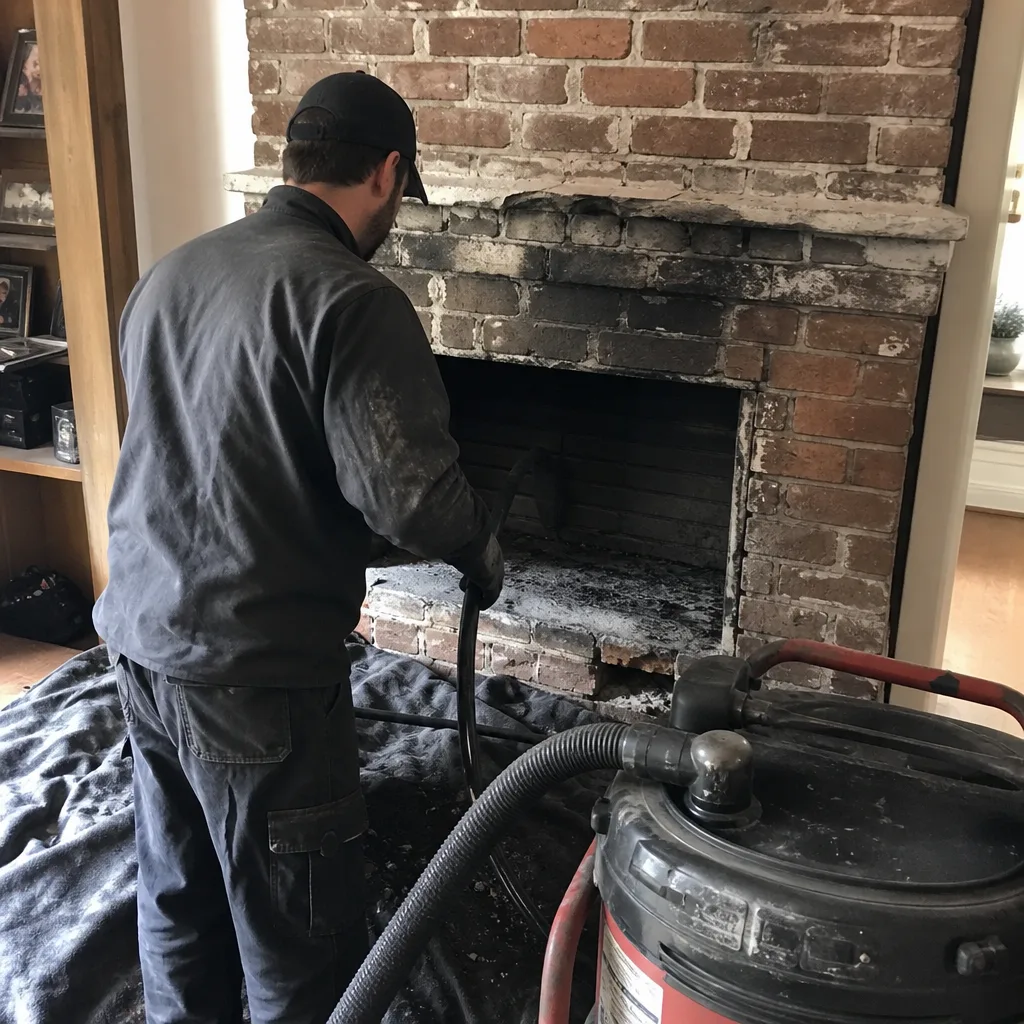 Before
 After
After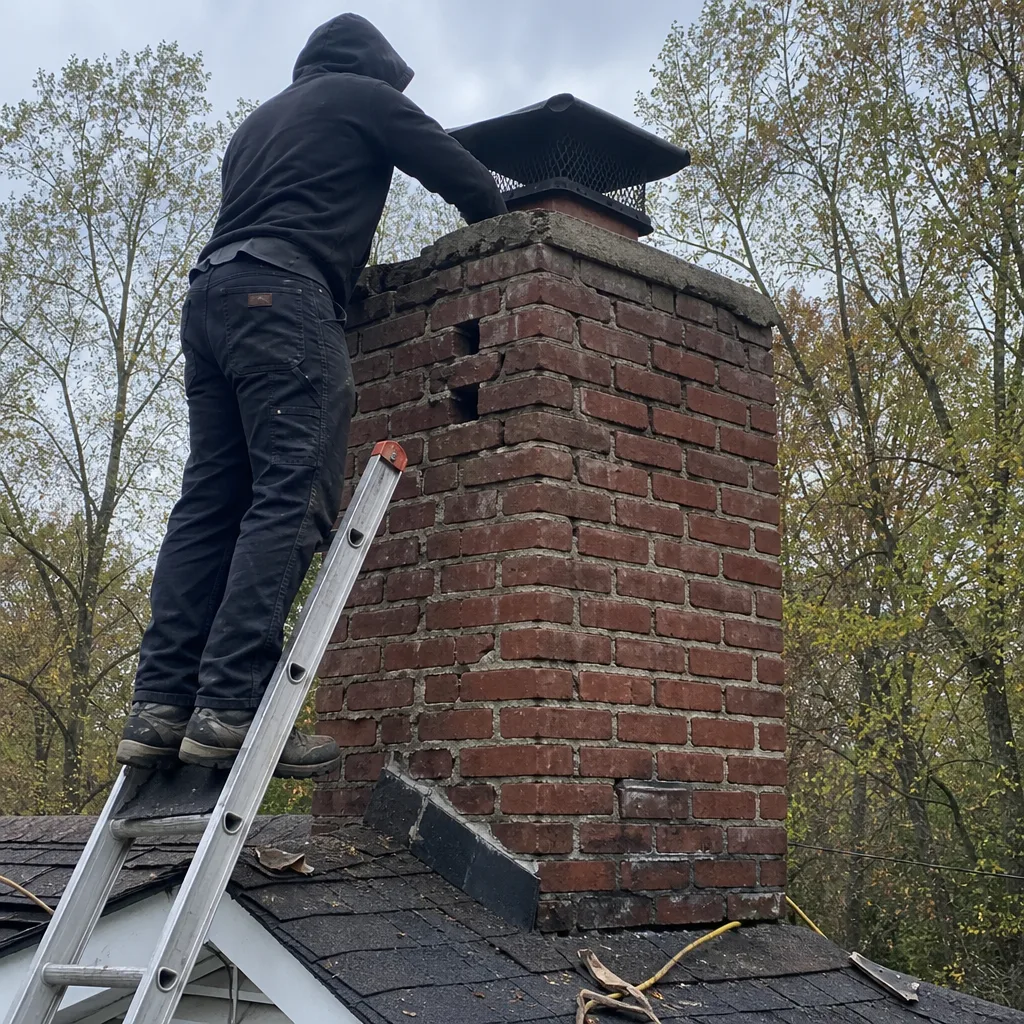 Before
 After
After