
Last updated October 15, 2026
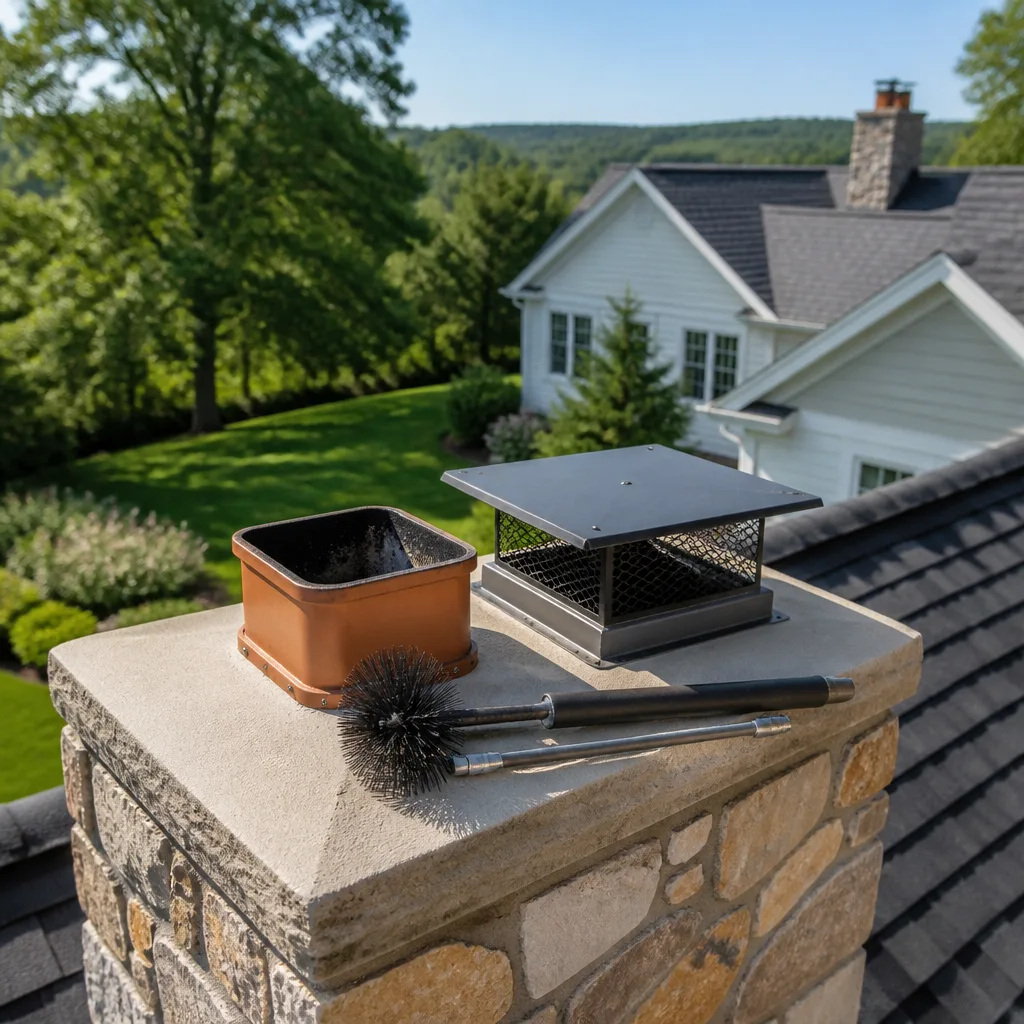 Sweep & inspection
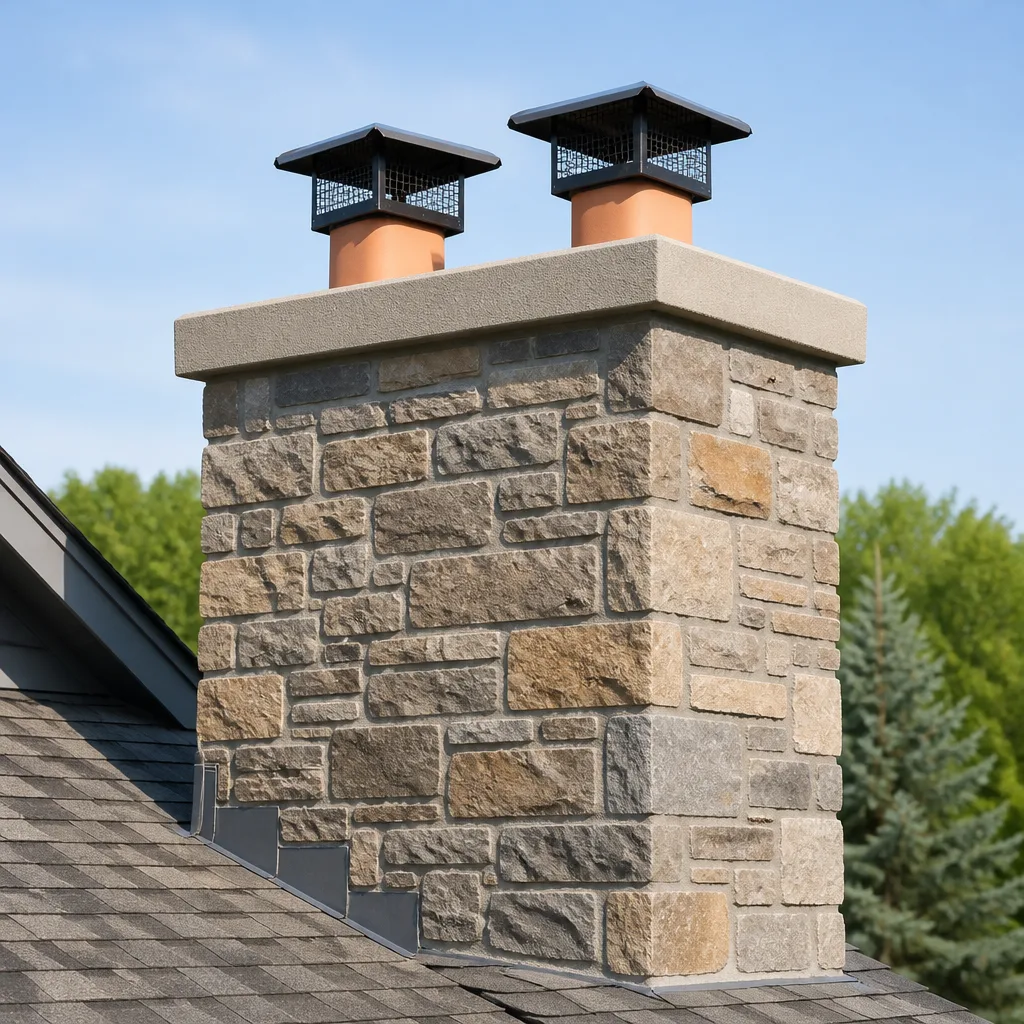 Caps & crowns
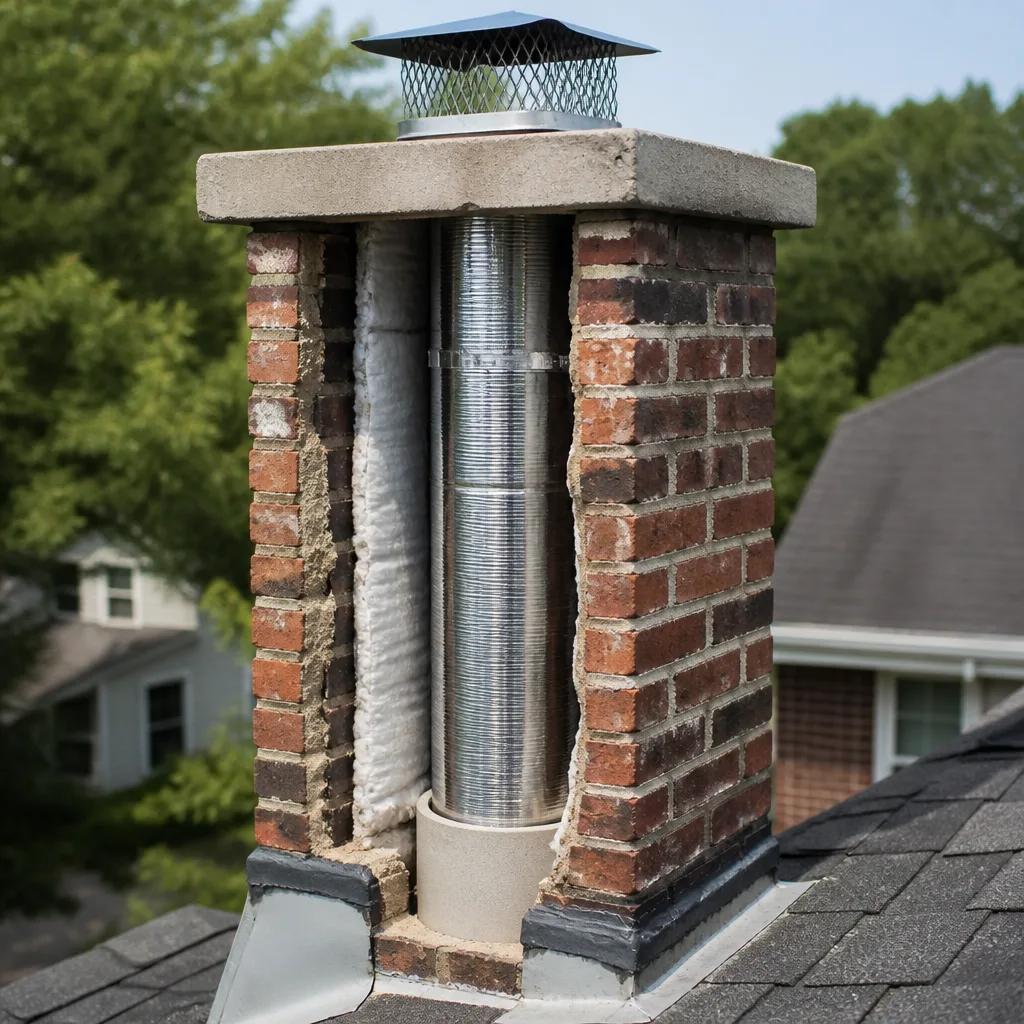 Flue relining
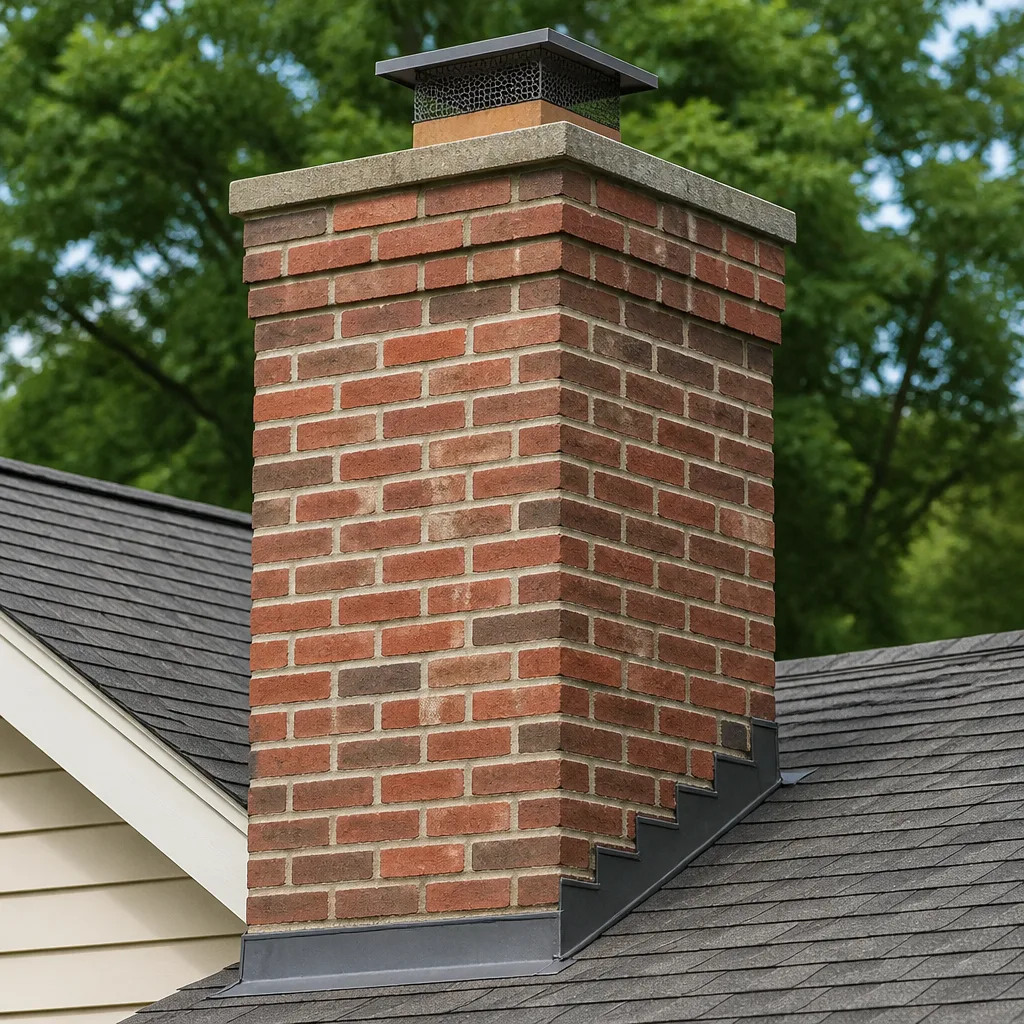 Masonry repair
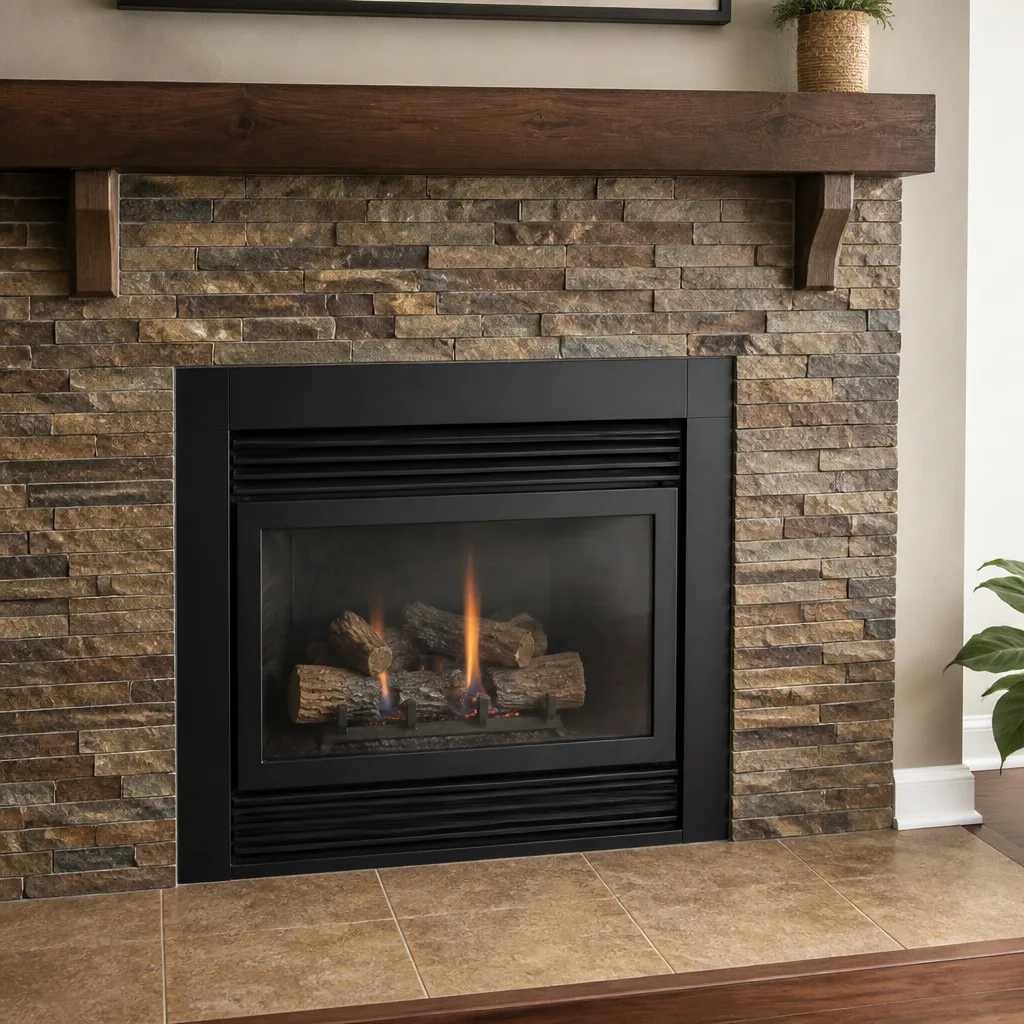 Gas fireplace service
Level 1 sweep and inspection to the NFPA 211 annual standard - flue, crown, cap, and flashing checked and photographed
Chimney sweep logs do not sweep chimneys. They loosen some creosote - which then falls where a brush and vacuum still have to collect it.
DIY vs Professional Chimney Cleaning: The Marietta Homeowner’s Decision Guide
The average chimney fire burns at around 2,000°F, hot enough to crack terra cotta flue liners and melt mortar joints, and most of them start with creosote the homeowner could not actually see. A brush kit from Amazon can move soot. What it cannot do is measure glaze-stage creosote thickness, spot a hidden crack in the smoke chamber, or tell you whether last season’s quiet chimney fire already damaged your liner. This guide, written for Marietta homeowners from our 20-plus years of work in Cobb County chimneys, draws the line between what DIY maintenance genuinely accomplishes and what it only pretends to accomplish, so you know exactly when the brush helps and when the brush creates a dangerous false sense of safety.
Styles & brands we work with
Quick Answer
DIY chimney cleaning works as a stopgap between professional cleanings, not as a replacement for them. For most Marietta homes, a professional chimney sweep every 40 to 60 fires (which is roughly one to two burning seasons here) costs $180 to $340-our Chimney Cleaning Cost Breakdown: The Marietta Homeowner’s Reference for 2026 explains how pricing works-and includes what no brush kit can: an interior camera inspection, creosote-stage assessment, liner check, and smoke chamber evaluation. If your chimney has not been professionally swept in over two years, start with a sweep, then ask your technician whether between-season brushing makes sense for your flue.
Table of Contents
- What DIY Chimney Cleaning Actually Accomplishes
- What a Brush Kit Physically Cannot Address
- When DIY Between-Season Cleaning Makes Sense
- The Insurance Angle: What Georgia Policies Expect
- What You Need for a Meaningful Self-Inspection
- How to Log Observations and Give Your Sweep Useful Context
- The Real Cost Comparison: DIY vs Professional in Marietta
- Common Mistakes to Avoid
- When to Call a Professional
- Frequently Asked Questions
- The Bottom Line
What DIY Chimney Cleaning Actually Accomplishes
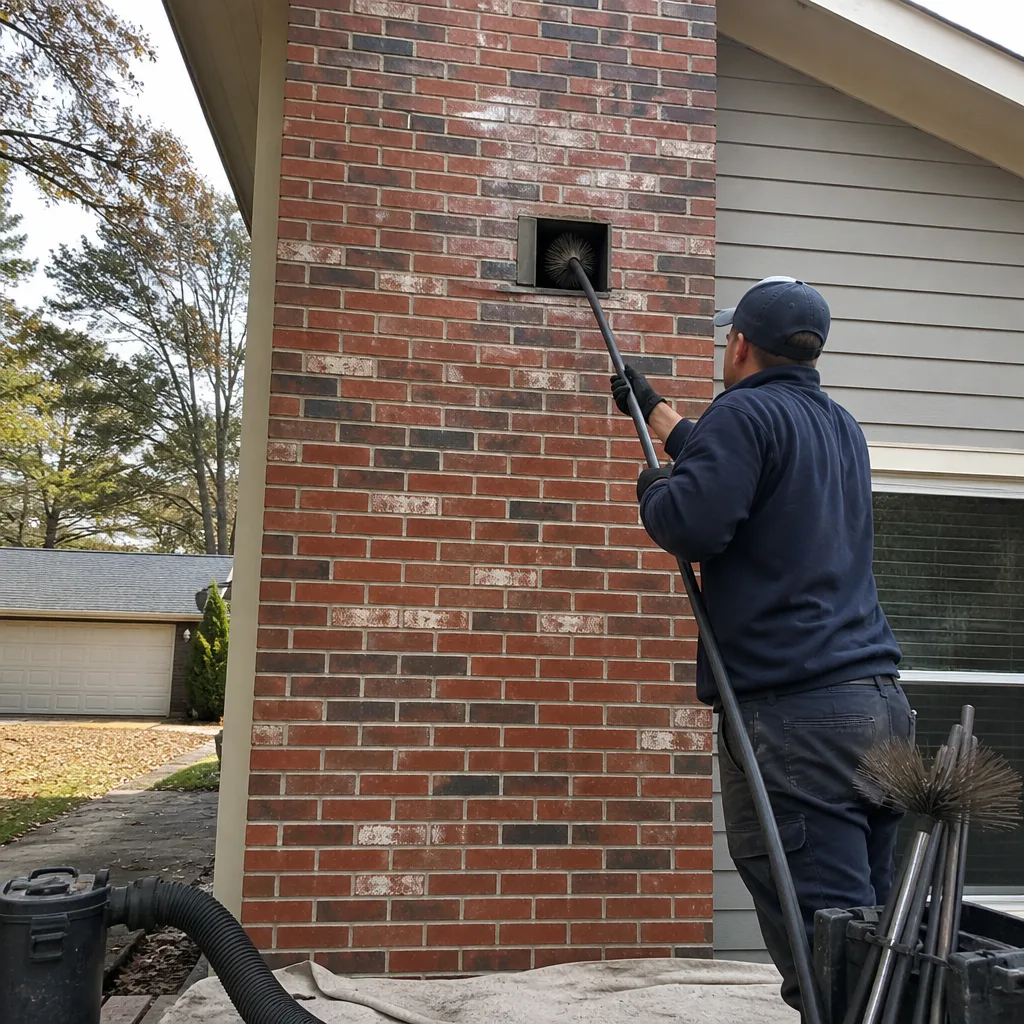
Let’s be straight about this, because we’ve watched homeowners burn money on tools that do not help, and we’ve watched other homeowners pull 3 gallons of soot out of a flue with a $45 brush kit and do a genuinely respectable job. The honest answer: a rotary or manual brush run down the flue from the roof removes loose, fluffy, stage-one creosote and accumulated soot. That is real work. Soot is flammable, and removing it before it bakes into a hard glaze absolutely reduces fire risk. If you burn hot, dry fires with seasoned hardwood, you can keep a chimney reasonably clear between professional visits this way in Marietta’s relatively mild winters, though Seasonal Chimney Cleaning Care for Marietta: Year-Round Homeowner’s Guide shows why timing still matters.
What the brush does mechanically is simple: it knocks down the particulate layer. That helps draft by smoothing the flue walls, and it reduces the fuel load for any future chimney fire. For a homeowner who burns maybe 15 to 20 fires a year, that kind of between-season brushing might be all the physical cleaning the chimney needs beyond an annual professional inspection.
But here is the line we draw with every single homeowner who calls us about DIY work in Marietta: a brush removes what you can reach with a brush. It does not measure what remains. It does not tell you the creosote thickness in the section of flue above the smoke shelf, where brushing is blind from both directions. It does not tell you whether the creosote has moved from stage one, the sooty dust you can brush away, to stage two, the crusty flakes that resist brushing, or stage three, the hardened glaze that a brush cannot remove at all. In our experience, most Marietta chimneys that develop serious creosote problems are in homes where someone brushed regularly and never once had a camera run through the flue.
So: DIY brushing does exactly one thing. It removes loose combustion deposits. It does that one thing well when the deposits are still loose. The problem is that the deposits that matter most are the ones the brush cannot touch.
What a Brush Kit Physically Cannot Address
We have pulled brush heads out of flues in East Cobb where the homeowner swore the chimney was clean because the brush came back black every time. Visible soot came off. What stayed behind was a quarter inch of glazed creosote on the upper third of the flue, invisible from the firebox and impossible to assess without a camera. That is not a homeowner failure, it is a limitation of the tool. No amount of elbow grease changes the physics.
Here is what a brush kit cannot address, and this list is what actually matters for fire prevention in Marietta homes:
- Stage-two and stage-three creosote. Stage-one is dusty soot. Stage-two is flaky, hardened creosote that resists nylon or wire brushing. Stage-three is a tar-like glaze that professional-grade rotary chains or chemical treatments are needed to remove. A homeowner brush cannot tell the stages apart from the roof, let alone remove the heavier ones.
- Liner integrity. Terra cotta tile liners crack from chimney fires, age, and thermal stress. A cracked liner lets heat and gases reach combustible framing. No brush reveals a vertical crack in the tile 15 feet up.
- Smoke chamber condition. The area just above the damper and below the flue is often the most damaged part of a Masonry chimney. Loose mortar, gaps, and uneven shoulders trap creosote and obstruct draft. Homeowners cannot see into this area without specialized mirrors and lights, and they cannot repair it with any retail tool.
- Mortar joint erosion. Gaps between flue tiles or in the smoke chamber let creosote soak into the masonry. Over time this creates a secondary fire path outside the intended flue. Only a camera inspection shows the joint condition.
- Damper function and seal. A warped or stuck damper changes draft, spills carbon monoxide into the living space, and wastes heated air. Brushing the flue does not test damper operation.
- Chimney cap, crown, and flashing integrity. Water entry is the number-one cause of masonry chimney damage in Georgia’s wet spring seasons. A brush run from the roof does not inspect the crown for hairline cracks or the flashing for separation.
- Carbon monoxide clearance verification. Professional sweeps in Georgia check that the flue is drawing correctly and the appliance venting is clear. A brush kit does not include a draft gauge or a combustion analyzer.
None of that is gatekeeping. It’s the difference between a job that removes soot and a job that tells you whether the chimney is safe to burn. They are two different jobs, and the second one cannot be done from the roof with a brush in one hand.
When DIY Between-Season Cleaning Makes Sense
There is one scenario where we genuinely recommend DIY brushing to Marietta homeowners: you had a professional chimney sweep and inspection within the past 12 months, that inspection came back clean or near-clean on camera, and you want to stay ahead of creosote accumulation during heavy burning months. In that case, a homeowner brush between professional visits is useful and frankly smart. It saves you the cost of a second professional sweep in the same season and keeps the flue from building up the heavy deposits that eventually require a rotary treatment.
Here is how to do it correctly without voiding warranties or creating insurance gaps:
- Get the camera inspection first. Without a baseline, you do not know what you are working with. In Marietta, a professional Chimney Inspection in Marietta costs between $150 and $350 depending on the level. Start there. The inspection report tells you whether your flue is a candidate for between-season brushing or needs professional cleaning now.
- Use the right brush for the liner. Stainless steel liners take a poly brush, not wire. Terra cotta can take a wire brush if the tiles are sound. The wrong brush scratches a stainless liner or catches on cracked clay and makes things worse. If you do not know your liner type, that’s the first thing the camera report tells you.
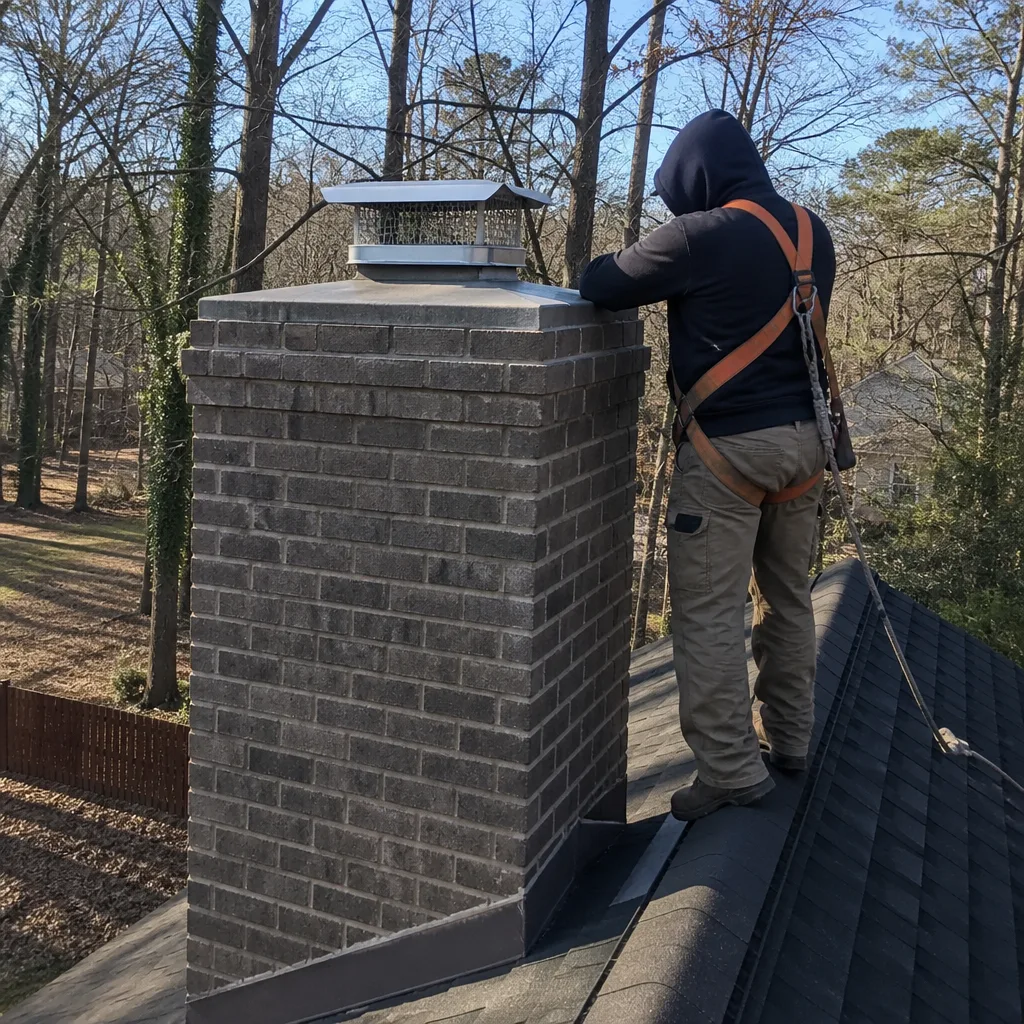
- Work from the roof with a second person holding the ladder. Marietta homes with steep roof pitches, especially the older ranches and split-levels all over East Cobb and West Marietta, are not forgiving of a solo homeowner with a brush in one hand. Falls from chimneys are life-altering. If your roof makes you uneasy, this is the moment to call us instead.
- Brush downward, never force it. A brush that will not pass is telling you something: stage-two creosote, an offset, or a damaged tile. Force it anyway and you will break a tile or lodge the brush head in the flue. Then a $180 sweep becomes a $400 extraction.
- Log the work and date. Write down when you brushed, what came out, and any resistance you hit. That log is gold for your next professional visit. It tells us where to look.
The key to all of this is the order: inspection first, brush second. Homeowners who brush first and inspect never end up inspecting. That’s how problems accumulate unseen for a decade or more.
The Insurance Angle: What Georgia Policies Expect
This is the part most DIY guides skate past, and it matters in Marietta specifically because of how Georgia homeowners insurance policies handle chimney fire claims. Standard HO-3 policies in Georgia cover sudden and accidental fire damage, including chimney fires, but adjusters look for maintenance records when a chimney is involved. The core question they ask: did the homeowner take reasonable steps to maintain the appliance?
“Reasonable steps” in practice means documentation. An insurance adjuster evaluating a chimney fire claim wants to see something that proves the chimney was professionally cleaned and inspected on a schedule that a reasonable person would consider adequate. For a wood-burning fireplace in Marietta, that means roughly once per year for regular burners, or once per burning season for heavier use. A receipt from a certified chimney sweep with a camera report attached answers the question and closes it.
What happens when there is no receipt and the only maintenance was DIY brushing? The claim does not automatically get denied. But the burden shifts. Now the homeowner has to prove the chimney was safe, or at least properly maintained, using their own testimony and the testimony of anyone who watched them brush. Adjusters are not in the business of free generosity on chimney fires, and a clean flue cannot be photographed from the firebox in a way that proves anything. Even a well-maintained chimney with no professional record puts the homeowner in an argument they may lose.
There is a second angle, and it is more Marietta-specific than most homeowners realize: some policies in Georgia include a “maintenance exclusion” that applies when the insurer can show the loss was caused by neglect. A chimney fire after 10 years with no professional inspection, even if the homeowner brushed every fall, can land inside that exclusion. The brush kit does not satisfy the insurer because the brush kit does not create a record of liner condition, creosote stage, or smoke chamber integrity. A camera report does all three.
Our practical advice, and it is what we tell homeowners all over Cobb County: do your DIY brushing between professional visits if you enjoy it, but never let DIY brushing be the only record of chimney care in a home with a wood-burning fireplace. Get the professional inspection at least every other year at minimum, save the camera stills and the report, and store them with your home documents. That file is worth more than any brush.
What You Need for a Meaningful Self-Inspection
A homeowner can learn more from a good flashlight and a dollar-store mirror than from a $300 brush kit. That is not an exaggeration. In our work across Marietta, from the brick ranches off Whitlock Avenue to the newer builds near Kennesaw Mountain, we have shown more than one homeowner that the problems in their chimney were visible from the firebox with nothing more than the right angle and the right light. The tool list for a useful homeowner inspection is short and cheap:
- A high-lumen LED flashlight. Not a phone light. A dedicated flashlight with 500 or more lumens and a focused beam. You need to actually see up into the smoke chamber and the bottom few feet of the flue, and phone LEDs wash out before the light reaches that high.
- A 12-inch telescoping mirror. This gets you the angle around the smoke shelf’s shoulder, the most common spot for creosote accumulation and cracked mortar. A mechanic’s inspection mirror on a swivel handle works.
- A creosote scratch test tool. A flat-head screwdriver works fine. Reach into the flue at the bottom (only when the fireplace is cold and you have gloves) and scratch the wall. If it flakes like soot, that’s stage one. If it comes off in hard black crust, that’s stage two. If it feels like candy and will not flake, that’s stage three.
- A notepad or phone camera. Take photos of what you see. Date them. The chimney will not look the same in six months, and the before photo tells you whether the condition is changing.
- Leather work gloves and a basic dust mask. Creosote is an irritant. You do not want it in your lungs, and you do not want it on your skin.
That is the entire kit. Notice what is not on it: a brush, a shop vac with a specialized filter, a ladder, or a harness. Those are for active cleaning and roof work. For knowing whether your chimney needs attention, the flashlight and mirror get you further than most people think.
One more observation from 20-plus years in this trade: the homeowners who do the best self-inspections are not the ones with the most gear. They are the ones who know what stage-one soot looks like compared to glaze. Spend five minutes on that distinction and you will know more than the average neighbor.
How to Log Observations and Give Your Sweep Useful Context
Here is where DIY observation genuinely multiplies the value of a professional visit. A homeowner who hands us a short log and two phone photos at the start of a sweep gives us a head start that saves time and often catches things earlier than a blind inspection would. The worst thing is not a homeowner who makes mistakes in their notes. It is a homeowner who says, “I don’t know, it always smelled fine to me.”
Here is a practical system we recommend, built for the way Marietta homes actually burn through the season:
- Log every fire you burn for more than an hour. Date, type of wood, approximate burn time. This matters because creosote accumulation is a function of fire count and burn temperature, not calendar time. A fireplace that sees 80 hot fires between October and March needs more attention than one that sees 12.
- Note any smell, smoke spillage, or strange sounds. A musty smell in the firebox after rain suggests water entry through the crown or flashing. Smoke puffing into the room on windy days suggests draft or damper issues. A faint popping sound during high burn suggests stage-two creosote igniting in small pockets. These are diagnostics; write them down.
- Photograph the flue from the firebox twice a year. Once in early fall before the burning season, once in late spring after it ends. The fall photo shows what you are starting with. The spring photo shows what accumulated. When you compare them to the professional camera stills, you develop an eye for the difference between stage-one dust and real creosote.
- Keep the log with your home maintenance records. When the inspector or insurance adjuster asks, the log shows you paid attention. That is the difference between a homeowner who demonstrates reasonable care and one who doesn’t.
- Do not clean a suspected problem before we look at it. If you see something concerning, photograph it and call. Do not brush it out and then call us for an inspection. We need to see what you saw. The evidence is more useful to both of us than the cleanup.
We ask homeowners to bring this context to every Chimney Sweep in Marietta, and honestly, the ones who do get a faster diagnosis and a more accurate estimate. Good observations keep professionals from having to re-diagnose what the homeowner already noticed.
The Real Cost Comparison: DIY vs Professional in Marietta
Let’s put real dollars to this, because most DIY versus professional guides dodge the actual math. In Marietta and the surrounding Cobb County market, here is what each approach costs over a typical five-year period for a home burning 30 to 50 fires per year:
The DIY route:
- Basic brush kit: $40 to $90, one-time or every few years
- Inspection mirror and flashlight: $30 to $60, one-time
- Roof ladder rental or purchase if you need one: $50 to $150 one-time (assuming you do not already own one and can safely use it)
- Time per session: 1.5 to 3 hours, roughly 4 to 6 sessions over five years
- Total outlay over five years: roughly $120 to $300
The professional route:
- Standard chimney sweep and camera inspection in Marietta: $180 to $340 per visit
- Recommended frequency for 30 to 50 fires per year: once every 12 to 18 months
- Total over five years: roughly $540 to $1,700 depending on frequency, chimney condition, and any repairs found
At first glance, the DIY route looks like a $400 to $1,400 saving. The missing variable is risk. The DIY route costs more than $120 to $300 the first time a cracked smoke chamber goes unnoticed for three seasons, or a stage-three creosote fire cracks the liner and requires a $3,000 to $6,000 reline. A $2,500 liner replacement wipes out a quarter century of DIY savings in one afternoon.
The economically honest approach for most Marietta homeowners is the hybrid model: professional sweep and camera inspection every 12 to 18 months, DIY brushing between visits during heavy burn periods. Total cost lands around $700 to $1,100 per five years for the professional component, plus $40 to $90 for a brush kit. That is the number that balances real fire prevention with real savings.
Common Mistakes to Avoid
- Treating one black brush head as proof of a clean flue. A brush comes back black even when glaze-stage creosote remains. The brush is not a gauge; it is a tool. Assume nothing from the color.
- Brushing a chimney you have never had professionally inspected. Without a baseline camera inspection, you do not know whether you are brushing a sound flue or a flue with a vertical crack that is waiting for one more season. Brushing first and never inspecting is the number-one pattern behind bad surprises in Marietta chimneys.
- Using a wire brush on a stainless steel liner. Wire scratches stainless, creating grooves that collect creosote and accelerate future build-up. Poly brushes for steel, wire only for sound terra cotta.
- Going onto a steep Marietta roof without a harness and a second person. The older homesteads and split-levels in East Cobb and along Dallas Highway have roof pitches that turn a simple chimney inspection into a fall hazard. The brush is not worth a broken back.
- Ignoring the damper because “it opens and closes fine.” A damper that operates but does not seal lets heated air escape all winter and cool air pour in all summer. It also leaks carbon monoxide in some backdraft conditions. Operation is not the same as seal.
- Burning unseasoned wood because “the chimney was just swept.” Green wood produces more creosote per fire than seasoned hardwood. A freshly swept chimney fills back up fast if you burn wet wood, especially during Marietta’s humid winters when wood stored outside never fully dries.
- Assuming a chimney cap is optional because yours is missing and nothing bad happened yet. In Georgia, a missing cap invites raccoons, birds, leaves, and gallons of rain into the flue. Rain turns creosote acidic and accelerates mortar deterioration. A cap is $150 to $300 well spent, and homeowners who skip it pay for it in masonry repairs later.
When to Call a Professional
Call a professional when any of these is true: your fireplace has not been camera-inspected in more than two years, you see stage-two creosote flakes or stage-three glaze on the flue wall from your firebox inspection, you smell a campfire odor in the house when the fireplace has not been used recently, smoke spills into the room on windy days, you hear popping in the flue during fires, you see visible cracks or spalling in the firebox brick, or you have not used the fireplace in years and want to start burning again. If you are unsure where to begin, see our guide on How to Hire a Chimney Cleaning Contractor in Marietta: A Step-by-Step Guide. None of these can be diagnosed or resolved with a homeowner brush. Ashby Chimney Marietta offers free estimates in Marietta, and we answer the phone around the clock. Call (478) 796-8742 and describe what you are seeing. If you have photos, even better; we will tell you honestly whether the chimney needs attention now or whether your between-season brushing is doing the job.
Frequently Asked Questions
A standard chimney sweep and camera inspection in Marietta runs between $180 and $340 depending on the chimney’s size, condition, and how heavy the creosote accumulation is. The price is stated before work begins, and the written quote is what you pay. Call (478) 796-8742 for an exact quote; estimates are free.
For a home burning 30 to 50 fires per season, which is typical in Marietta, schedule a professional sweep every 12 to 18 months. Homes that burn heavier or burn unseasoned wood may need more frequent service. The best measurement is a creosote inspection: when deposits reach roughly a quarter inch of flaky or glazed creosote anywhere in the flue, it is time. We can tell you where yours stands with a camera inspection.
You can remove loose soot yourself with a brush kit, but you cannot assess creosote stage, liner integrity, smoke chamber condition, or draft. Those are the factors that cause chimney fires and carbon monoxide problems, not the soot you can reach. DIY between professional inspections is fine; DIY instead of professional inspections is how problems accumulate unseen.
Georgia policies do not generally name professional cleaning as a coverage condition in writing, but adjusters evaluate chimney fire claims by looking for maintenance records. A professional sweep receipt with camera stills answers their questions; a DIY-only history may not. For a wood-burning fireplace, keep professional inspection records at least every two years, saved with your home documents. If you ever file a chimney fire claim, those records are the difference between a straightforward settlement and a fight.
Stage-three creosote is a hard, shiny, tar-like glaze that forms when stage-one soot bakes under repeated chimney fires. It looks like black glass on the flue wall and cannot be removed with a homeowner brush. Professional removal involves rotary chains or chemical treatments, and in severe cases the flue liner needs replacement. If you scratch the flue and it feels like candy, stop burning and call us.
You usually cannot tell from the firebox. A cracked terra cotta liner shows up as vertical fractures inside the flue that are visible only with a camera run by a trained sweep. Warning signs include pieces of clay tile in the firebox, a campfire smell in the house, or a history of a chimney fire even if the fire was small. If any of those apply in your Marietta home, get a camera inspection before the next burn.
The Bottom Line
DIY chimney brushing is not wrong when it is done as maintenance between professional cleanings. It becomes wrong when it replaces professional inspection, because the most dangerous chimney problems are invisible to the homeowner no matter how diligently they brush. For Marietta homeowners, the practical answer is a hybrid: have your chimney professionally swept and camera-inspected every 12 to 18 months, brush between visits during heavy burn seasons if you enjoy it and your roof is safe to work on, and keep a simple log of fires and observations. That routine costs about $200 a year in professional service and protects both your house and your standing with your insurance company. The $40 brush is a supplement, not a solution. For help deciding where your chimney stands, start with our Ashby Chimney Marietta home page or call (478) 796-8742; we will give you an honest read and a written price before any work begins.
Written by Nathan Corliss, Owner at Ashby Chimney Marietta, serving Marietta since 2002. Browse more guides & resources from our team.
See the difference
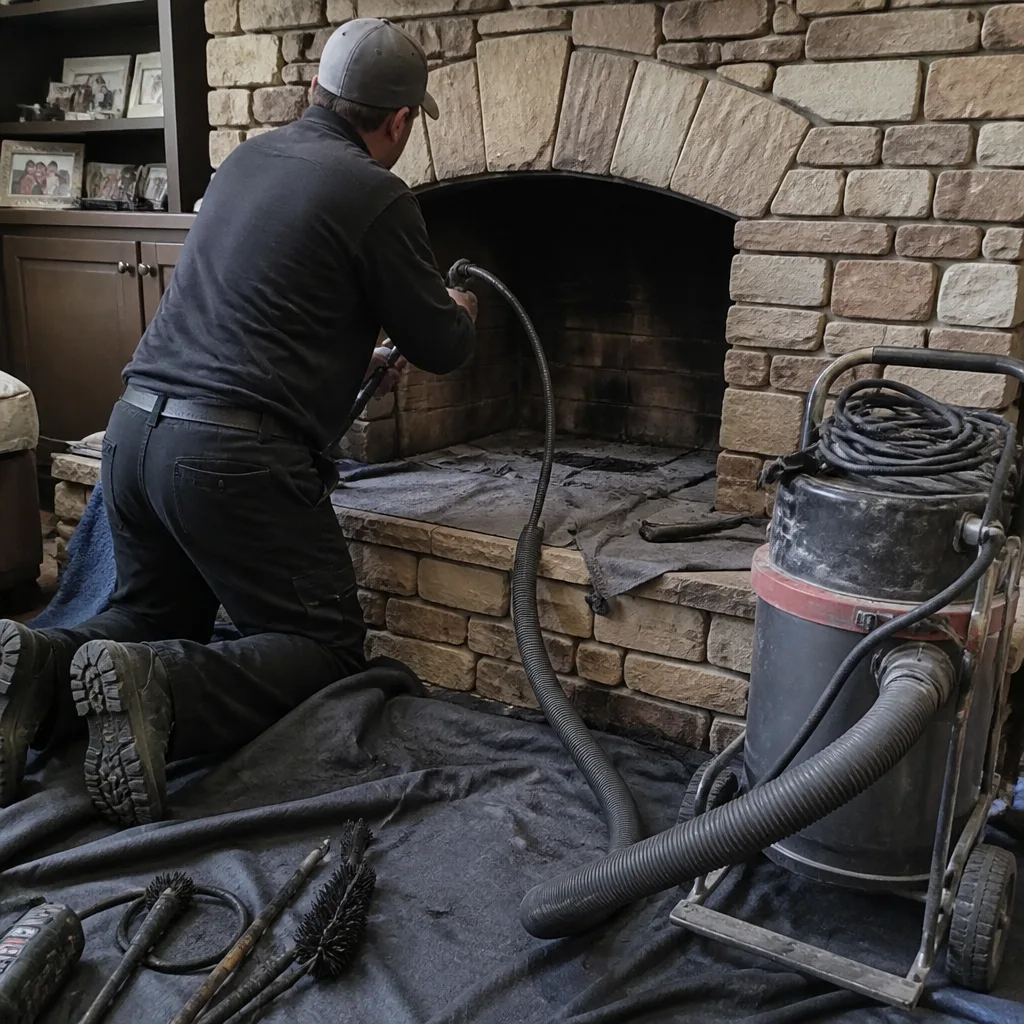 Before
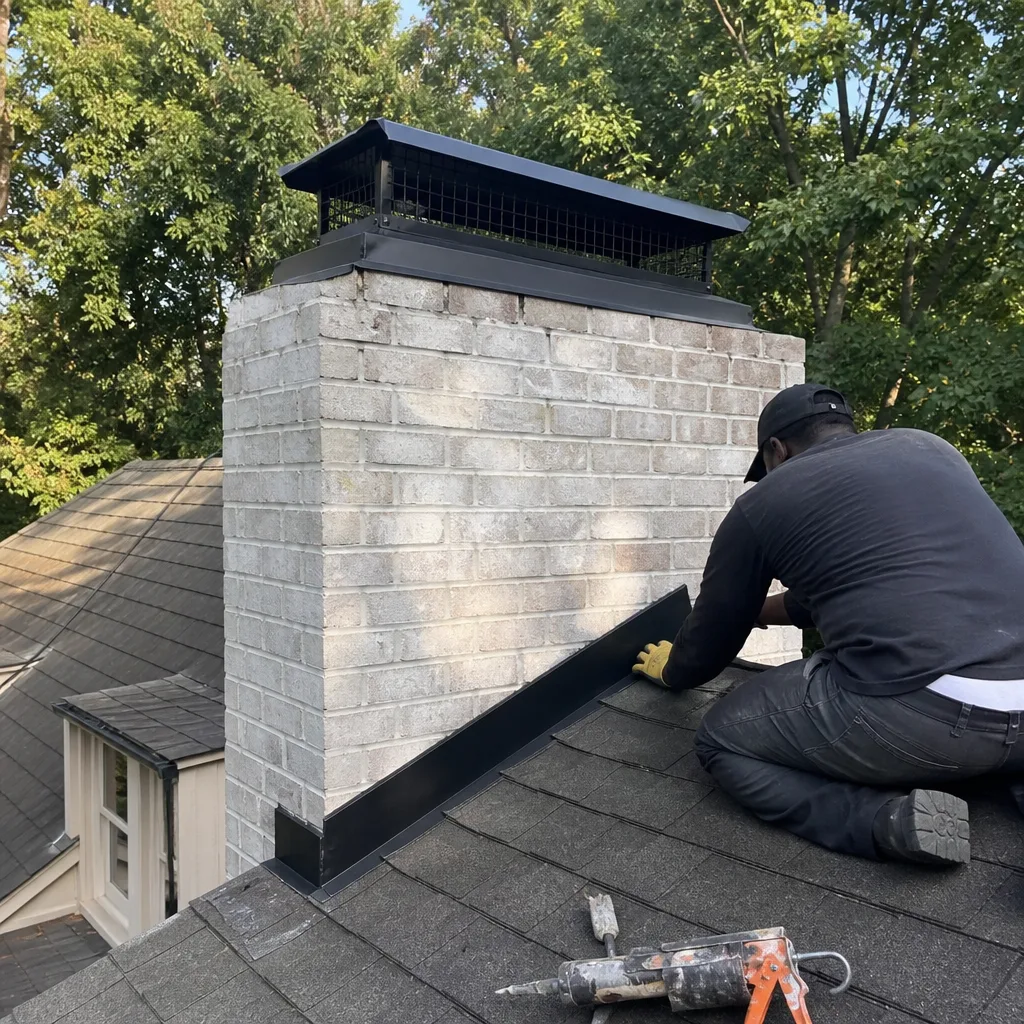 After
After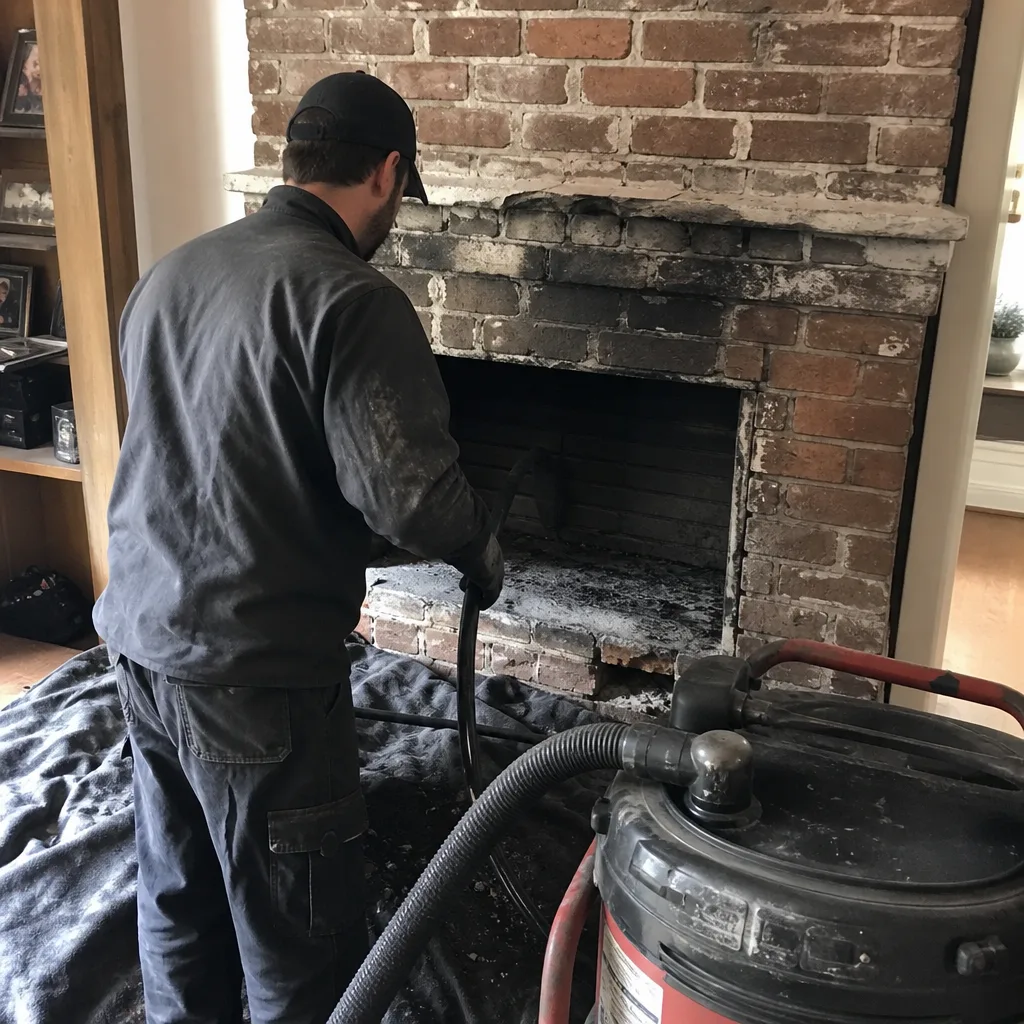 Before
 After
After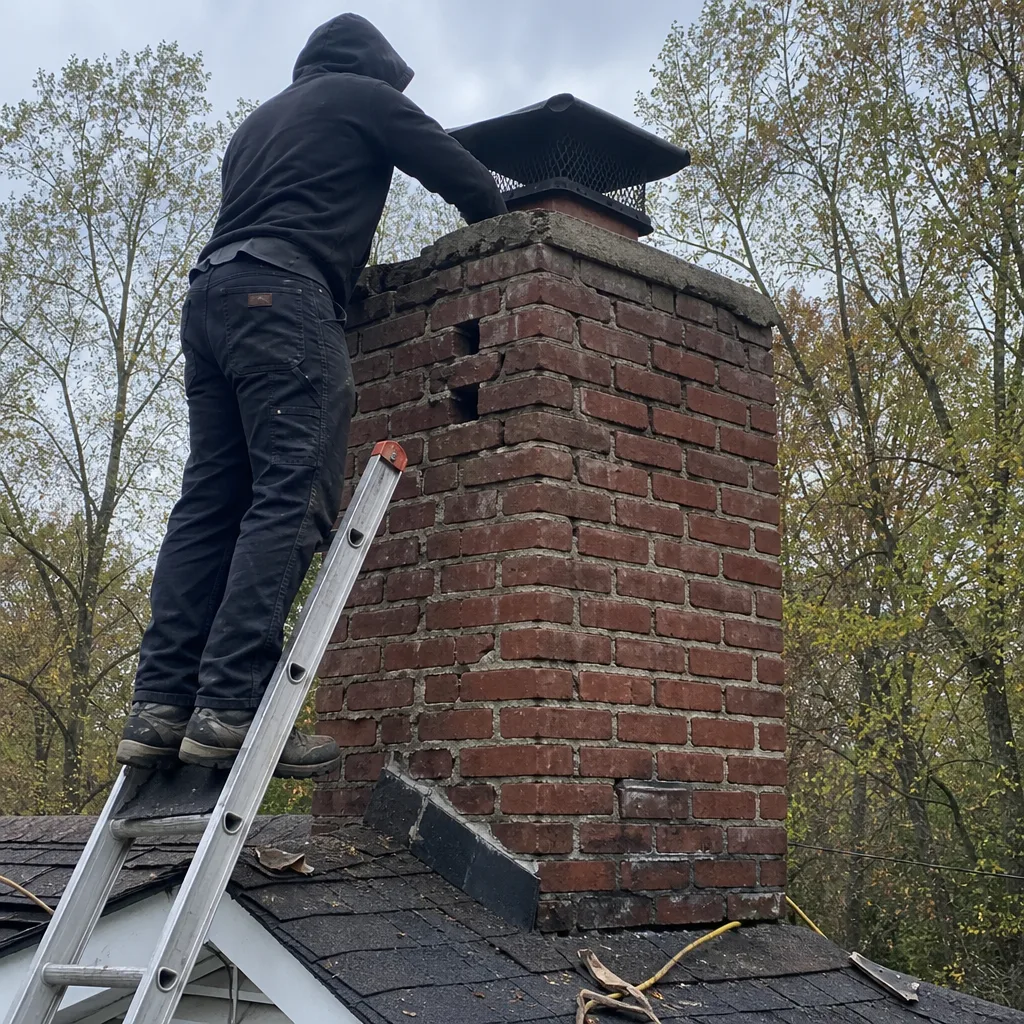 Before
 After
After